
Last updated October 16, 2026
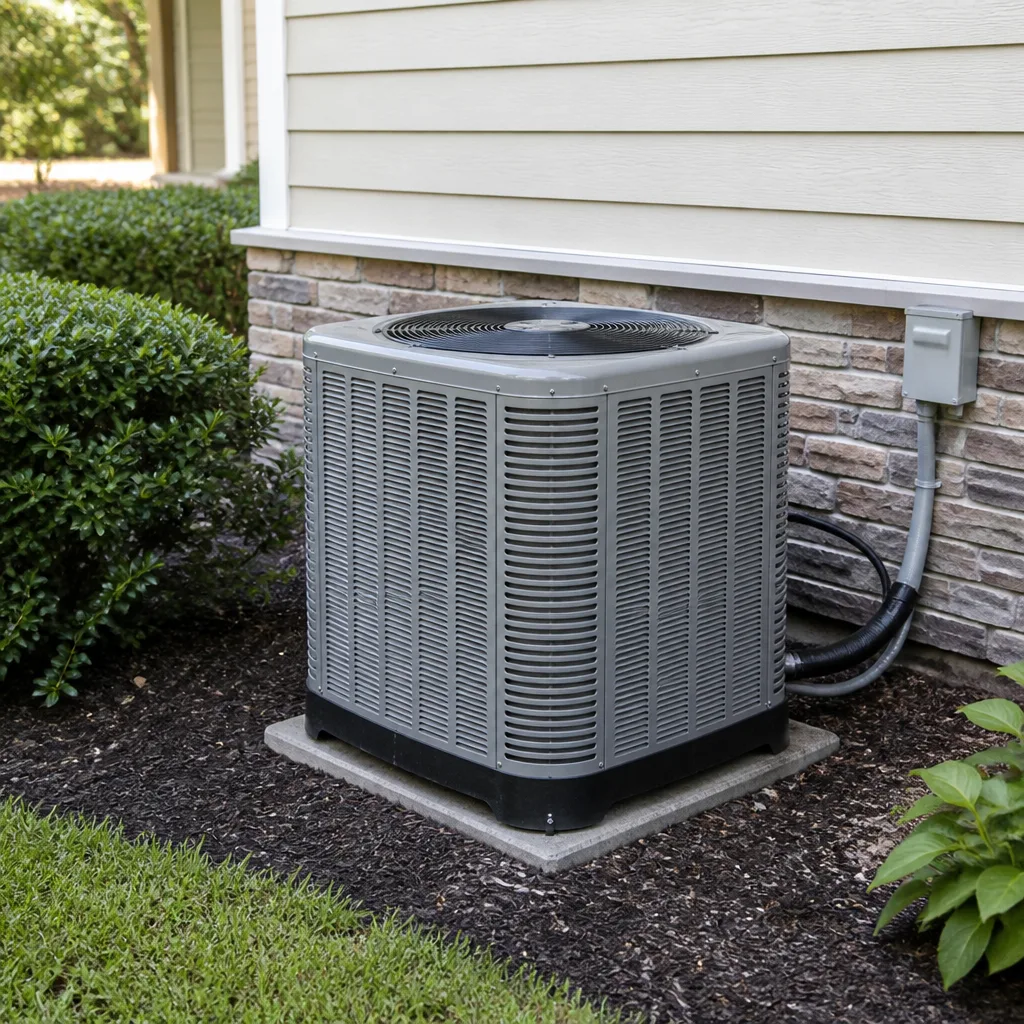 AC repair
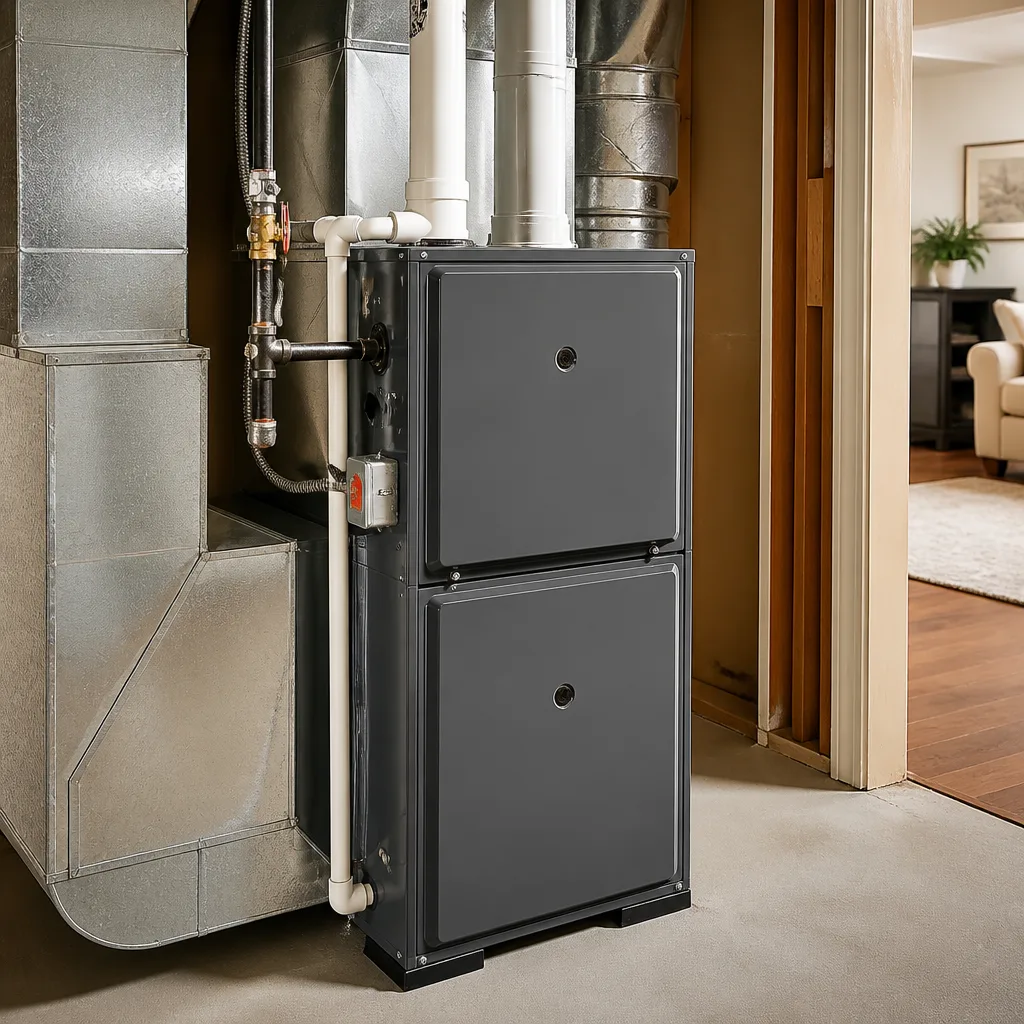 Furnace & heating
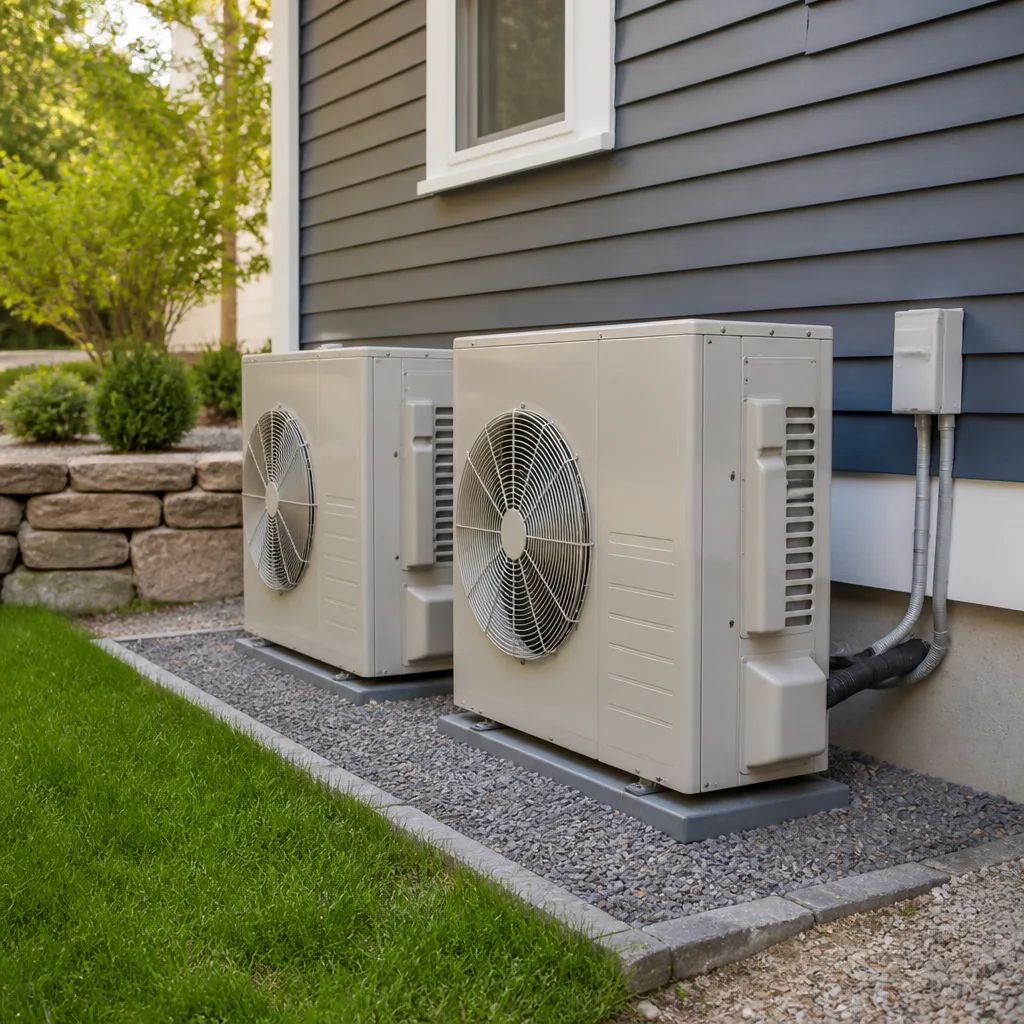 Heat pumps
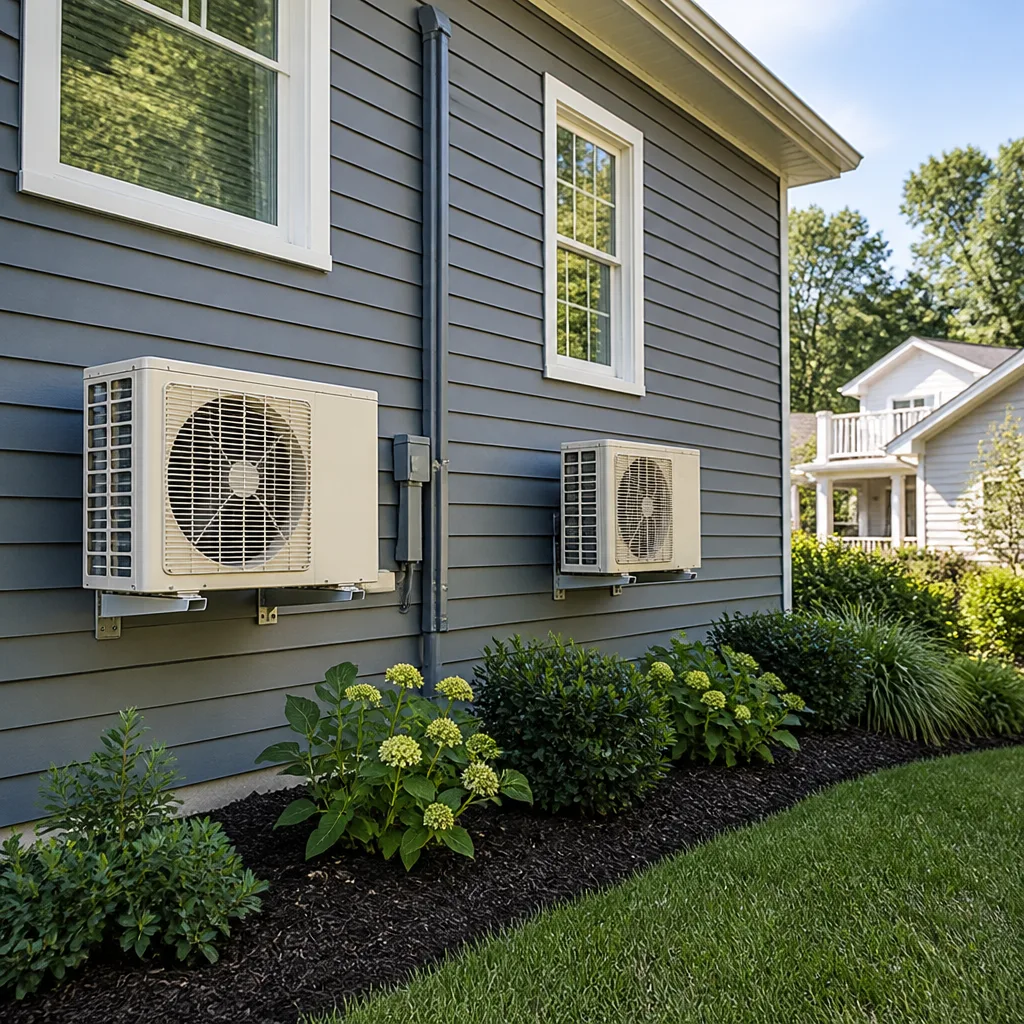 Ductless mini splits
 Carrier
 Trane
Trane Goodman
Seasonal tune-up and full diagnostic on your Carrier, Trane, or Goodman system - readings shown to you before any repair is proposed
Diagnosis first, numbers second - you approve the repair price before a single part goes in.
Get your free estimateThe Complete Guide to HVAC in Jacksonville
Jacksonville logs more annual cooling hours than Miami in some zip codes. That sounds backwards until you live here: Miami gets the ocean breeze, and Jacksonville gets the still, heavy air that sits over the St. Johns River and doesn’t move for weeks at a time. Yet most HVAC guides written for “Florida homeowners” are built around Orlando’s inland conditions, leaving coastal Jacksonville households with recommendations that quietly cost them money. This guide is different. We’re going to look at your HVAC system the way a Jacksonville tech actually sees it: salt on the coils, humidity in the ducts, and a cooling season that runs from March to November. By the end, you’ll know what to ask for, what to refuse, and what a fair price actually looks like in this city.
Quick Answer
Jacksonville homeowners need HVAC systems sized for humidity removal first and cooling capacity second, because dew points above 70°F are common from May through October. Expect to pay $7,500 to $14,000 for a full system replacement depending on SEER rating and equipment type, and plan for a service life of 10 to 14 years instead of the 15 to 20 you’d get inland. Salt air along the St. Johns River corridor accelerates coil corrosion enough that annual maintenance is not optional here, it’s the difference between a 10-year system and a 14-year one.
Styles & brands we work with
Table of Contents
- Why Jacksonville’s Climate Breaks Standard HVAC Advice
- Salt Air and Coil Corrosion: What to Ask For by Name
- Dehumidification: The Spec That Matters More Than Cooling Capacity
- What a 14 SEER vs. 18 SEER Unit Really Costs in Jacksonville
- Ductwork Standards by Neighborhood and What They Mean at Inspection
- How to Read a Threshold Verified Technician Badge
- A Jacksonville Maintenance Schedule That Actually Holds Up
- Repair or Replace: A Straightforward Decision Framework
Why Jacksonville’s Climate Breaks Standard HVAC Advice
Jacksonville sits at the meeting point of three weather systems: the Atlantic seabreeze, the St. Johns River corridor, and a subtropical inland pattern that pushes temperatures into the mid-90s with dew points in the mid-70s. That combination means your air conditioner is not just cooling air. It’s removing enough moisture to make 78°F feel like 72°F, and it’s doing that work for close to 3,000 hours a year. A system sized for a dry 95°F day in Phoenix has completely different engineering requirements than one sized for a 92°F day in Jacksonville with 74°F dew point air pressing against your windows.
The practical effect is simple: a system that’s undersized for humidity removal will cool the air quickly and then shut off before it has pulled enough moisture out. You get that cold, clammy feeling where the thermostat says 74°F but the air feels like a damp basement. We see this constantly in homes across Jacksonville where an HVAC contractor sized the unit using a generic rule of thumb instead of running a proper Manual J load calculation that includes latent load, which is the air conditioning term for how much water the system has to remove from the air. That’s why knowing how to hire the right HVAC contractor in Jacksonville matters as much as the equipment itself.
In our experience, Jacksonville homes need a system that runs longer at lower capacity rather than one that blasts cold air in short bursts. That preference for longer run times favors two-stage and variable-speed equipment, which we’ll get into shortly. The key point for now: climate is not a footnote in Jacksonville HVAC decisions. It’s the primary variable.
Salt Air and Coil Corrosion: What to Ask For by Name
Salt-laden air is a fact of life for anyone living within a few miles of the St. Johns River or the Intracoastal Waterway, which covers a huge portion of Jacksonville including San Marco, Riverside, Avondale, Ortega, and the Beaches corridor. Salt particles settle on the aluminum fins of your outdoor condenser coil. When they combine with the condensation that naturally forms on the coil, you get a mild but relentless electrochemical reaction that eats away at the metal. The result is a coil that develops pinhole leaks years before it should.
This is not a subtle problem. In Riverside and San Marco, where homes are often older and equipment sits in tight side yards with limited airflow, we regularly see condenser coils fail at the 7 to 9 year mark even when interior components still work fine. The same unit in Mandarin or Baymeadows, a little farther from the river, typically gets 10 to 12 years out of the same coil.
What should you ask for? The single most effective specification is an epoxy-coated or hydrophilic-coated coil. These coatings are applied at the factory and dramatically slow the corrosion process. Carrier calls theirs “ArmorTech” coil protection. Trane offers a “Spine Fin” design that’s inherently less prone to salt corrosion because of its coiled-aluminum construction. Lennox uses a “Quantum Coil” on their higher-end units. These are not marketing gimmicks. They’re material science answers to a real Jacksonville problem.
If you’re replacing a system and you live within three miles of salt water or brackish river water, ask your contractor specifically: “Is the condenser coil factory-coated for corrosion resistance?” If the answer is vague or the contractor tries to sell you a spray-on aftermarket coating, push back. Factory coatings are baked on and last the life of the coil. Spray-on treatments wash off within a season or two.
Dehumidification: The Spec That Matters More Than Cooling Capacity
Jacksonville’s high dew points mean dehumidification capacity matters as much as cooling capacity when sizing a system. Here’s the problem in plain terms. A typical single-stage air conditioner removes moisture only while it’s running. When the thermostat reaches its set point, the compressor shuts off, and the coil stops condensing water out of the air. On a day with a 76°F dew point, your home can hit 74°F on the thermostat and still feel sticky, because the air is holding onto 60% or more relative humidity.
The fix is not to turn the temperature down. That costs money and makes the problem worse, because colder air feels clammy when it’s humid. The fix is to match the system’s sensible heat ratio, which is the technical term for how much of a system’s capacity goes to cooling air versus removing moisture, to Jacksonville’s actual conditions. A standard system runs a sensible heat ratio around 0.75, meaning it uses 75% of its energy to cool air and 25% to dehumidify. A system optimized for coastal humidity runs 0.65 or lower, which means it spends more of its energy pulling water out of the air.
Two features achieve this. The first is a two-stage or variable-speed compressor that runs at a lower capacity for longer cycles. Longer run times mean more air passes across the cold coil, and more air across the coil means more moisture removed per cooling cycle. The second is a dehumidification mode controlled by the thermostat. Carrier’s Infinity system and Trane’s ComfortLink II both offer this: when humidity rises above a set point, the system runs the fan at a lower speed and overcools the air slightly to pull moisture out, even if the temperature hasn’t risen enough to trigger a normal cooling call.
What does this mean in real numbers? A correctly sized two-stage unit in a Jacksonville home can maintain 50% relative humidity at 76°F indoor temperature. A single-stage unit in the same home might need 72°F to hit the same comfort level. That four-degree difference is worth about $30-45 a month on your JEA bill during the summer, depending on your home’s square footage and insulation level.
What a 14 SEER vs. 18 SEER Unit Really Costs in Jacksonville
SEER stands for Seasonal Energy Efficiency Ratio, and it works like gas mileage on a car. A higher SEER means the unit uses less electricity to produce the same amount of cooling. But the savings math that works for a homeowner in Ohio, where the AC runs four months a year, does not apply in Jacksonville, where cooling season lasts nine months. National guides tell you a jump from 14 SEER to 18 SEER saves maybe 10-15% on cooling costs. That understates Jacksonville reality, because our system runs almost twice as many hours as the national average those guides assume.
Let’s work through the actual numbers for Jacksonville specifically. A typical 2,000 square foot home in Jacksonville uses about 7,500 to 9,000 kilowatt-hours per year for cooling, depending on insulation, window condition, and thermostat habits. At JEA’s residential rate of roughly 13 cents per kilowatt-hour as of 2025, that’s $975 to $1,170 a year in cooling electricity. A 14 SEER unit is the minimum efficiency allowed by current federal standards, and it’s what you’ll get if you go with the lowest-price bid. An 18 SEER unit, typically a two-stage or variable-speed system, uses about 22% less electricity for the same cooling output. That’s $215 to $260 a year in savings at current rates.
The cost difference between a 14 SEER single-stage system and an 18 SEER two-stage system for a 3-ton unit in Jacksonville typically runs $2,800 to $4,200, depending on brand and whether the air handler needs to be upgraded to match. At the high end of that range with current JEA rates, the higher-efficiency system pays for itself in electricity savings in 10 to 12 years. But that’s not the whole story. The 18 SEER unit also does a measurably better job at dehumidification, which means you set your thermostat higher for the same comfort, which means you save more than the raw efficiency numbers suggest. The real payback period for Jacksonville is closer to 7 to 9 years, not 10 to 12.
Equipment price ranges for Jacksonville, parts and labor included:
- 14 SEER single-stage AC with standard air handler: $4,800 – $6,500
- 16 SEER single-stage AC with multi-speed air handler: $6,200 – $8,000
- 18 SEER two-stage AC with variable-speed air handler: $8,500 – $11,000
- 20+ SEER variable-speed AC with variable-speed air handler: $11,500 – $14,500
These are installed prices for a 3-ton unit, which covers most 1,800 to 2,400 square foot Jacksonville homes. Larger homes will run higher. If someone quotes you less than $4,000 for a full system replacement, the equipment is likely builder-grade, the labor warranty is likely thin, and the Manual J load calculation was almost certainly skipped. We’ll talk more about that in the ductwork section.
Ductwork Standards by Neighborhood and What They Mean at Inspection
Jacksonville’s housing stock ages unevenly. The post-war neighborhoods built in the 1940s and 1950s, Riverside, Avondale, San Marco, parts of Springfield, have ductwork that was originally designed for gravity heating or early forced-air systems that moved far less air than a modern AC requires. Add decades of patchwork renovations, additions that were never properly integrated into the original trunk line, and return air paths that were blocked off or never installed, and you get static pressure numbers that would fail a modern load calculation on day one.
Why does static pressure matter? Your blower motor pushes air through the supply ducts and pulls it back through the return ducts. If the return side is too small, the system works harder, moves less air, and leaves humidity in places where it shouldn’t be. If the supply side is too small, you get noisy registers, cold spots, and rooms that never reach temperature. The technical spec you want to hear is total external static pressure below 0.5 inches of water column. That’s the industry standard for a well-designed system. Older Jacksonville homes often measure 0.7 to 1.0, especially in Riverside and Avondale where duct chases are narrow and returns are undersized.
What this means at inspection time is concrete. If you’re replacing a system in an older Jacksonville home, the contractor should measure static pressure before quoting the job. If they don’t, they’re guessing, and you’ll pay for that guess every summer when your new high-efficiency unit underperforms because the ductwork is choking it. A good contractor will either include duct modifications in the quote, or they’ll tell you honestly that your existing ducts are fine and show you the measured numbers. Either answer is acceptable. A contractor who never mentions ducts at all is a red flag.
Newer construction, Mandarin, Bartram Park, Nocatee, Julington Creek, typically has ductwork installed to modern standards, but it has a different problem: flex duct runs that sag over time, get pinched by attic storage, or pull loose from the plenum. We see this constantly in attic inspections across the Southside. A sagging flex duct can cut airflow to a room by 30% or more without making any noise. The fix is cheap, sometimes just a support strap and some mastic sealant, but finding it requires the tech to actually go into the attic with a flashlight and look.
How to Read a Threshold Verified Technician Badge
Here’s a security baseline that belongs in any reputable HVAC relationship. You are letting a stranger into your home, often when you’re home alone, often when your kids are asleep upstairs. The threshold of your front door is the security boundary. Everything about who crosses it should be verified before you open it.
That’s what the Threshold Verified standard exists to solve. Every Brandt HVAC Co Jacksonville technician, and every technician working under a Threshold Group-affiliated home services company, goes through the same process before they’re ever assigned to a Jacksonville home: background check, identity verification, and badging. Here’s what you should see and verify at the door.
Step 1: Before the visit. You receive the technician’s name and photo before they arrive. Not “a technician will be by sometime between noon and 5.” A specific name. A face. If you didn’t get a name and photo, call the office and ask for it before anyone arrives.
Step 2: At the door. The technician shows a photo ID badge that matches the name and photo you were sent. The badge has a Threshold Verified mark on it. Hold it up. Look at the face on the ID and the face in front of you. This takes five seconds and it’s not rude, it’s exactly what the system is designed for.
Step 3: If it doesn’t match. Don’t open the door. Call the office. If anyone arrives who you were not told to expect, that visit is on us and we make it right. That’s the standard.
This protocol matters more in Jacksonville than in most cities, because Jacksonville is a transient market. Military families rotating through NAS Jax and Mayport, people moving in from out of state, college students in Southside apartments. A lot of people here don’t have a decade of neighborhood context telling them who’s trustworthy. Verification replaces guesswork.
A Jacksonville Maintenance Schedule That Actually Holds Up
Standard HVAC advice says “change your filter monthly and have the system serviced twice a year.” That’s fine for Ohio. For Jacksonville it’s incomplete. Here’s a schedule built for coastal Florida conditions, with the specific tasks that matter here and the reasons why.
Every 30 days during cooling season (March through November): Check the filter. If you have a 1-inch filter, replace it monthly during peak cooling months, not every three months. Salt air and humidity load filters faster here than in dry climates. If you have a 4-inch media filter, check it monthly and replace every 3-6 months depending on how it looks.
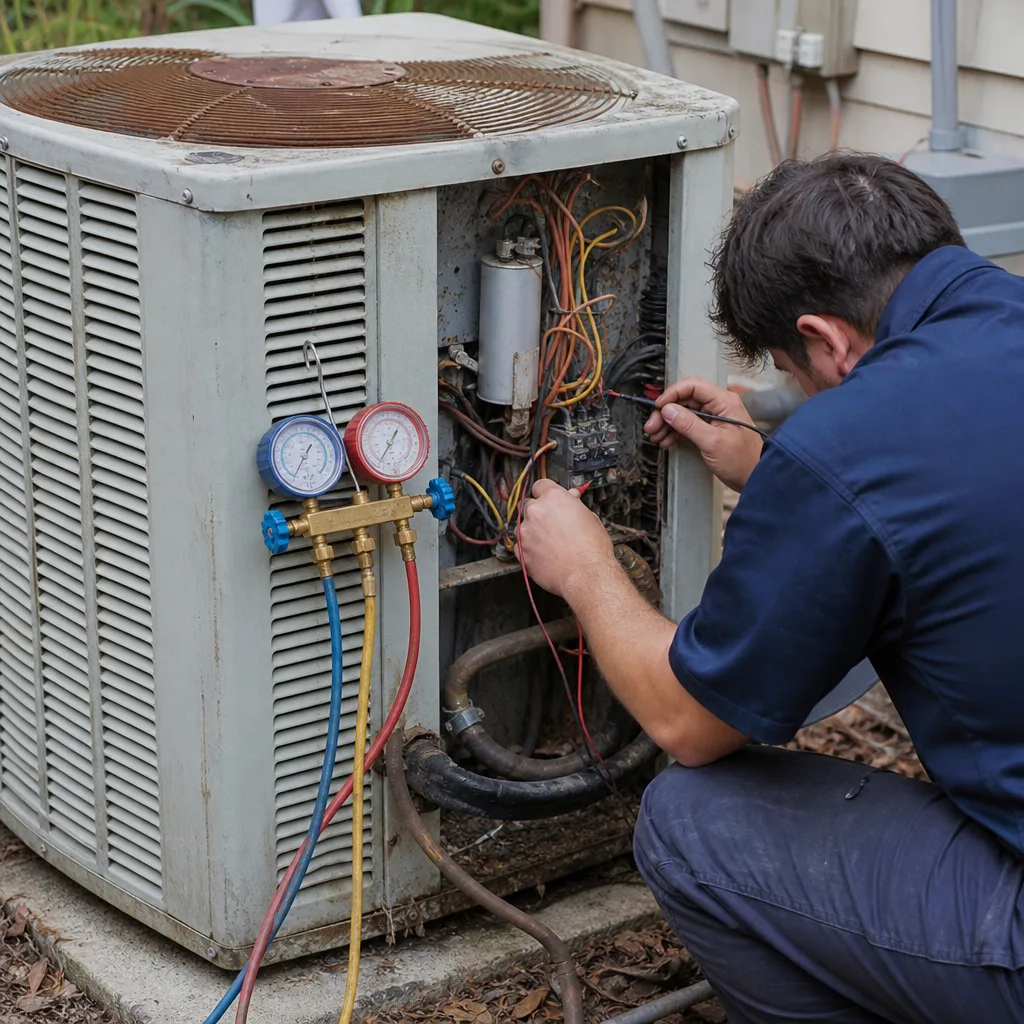
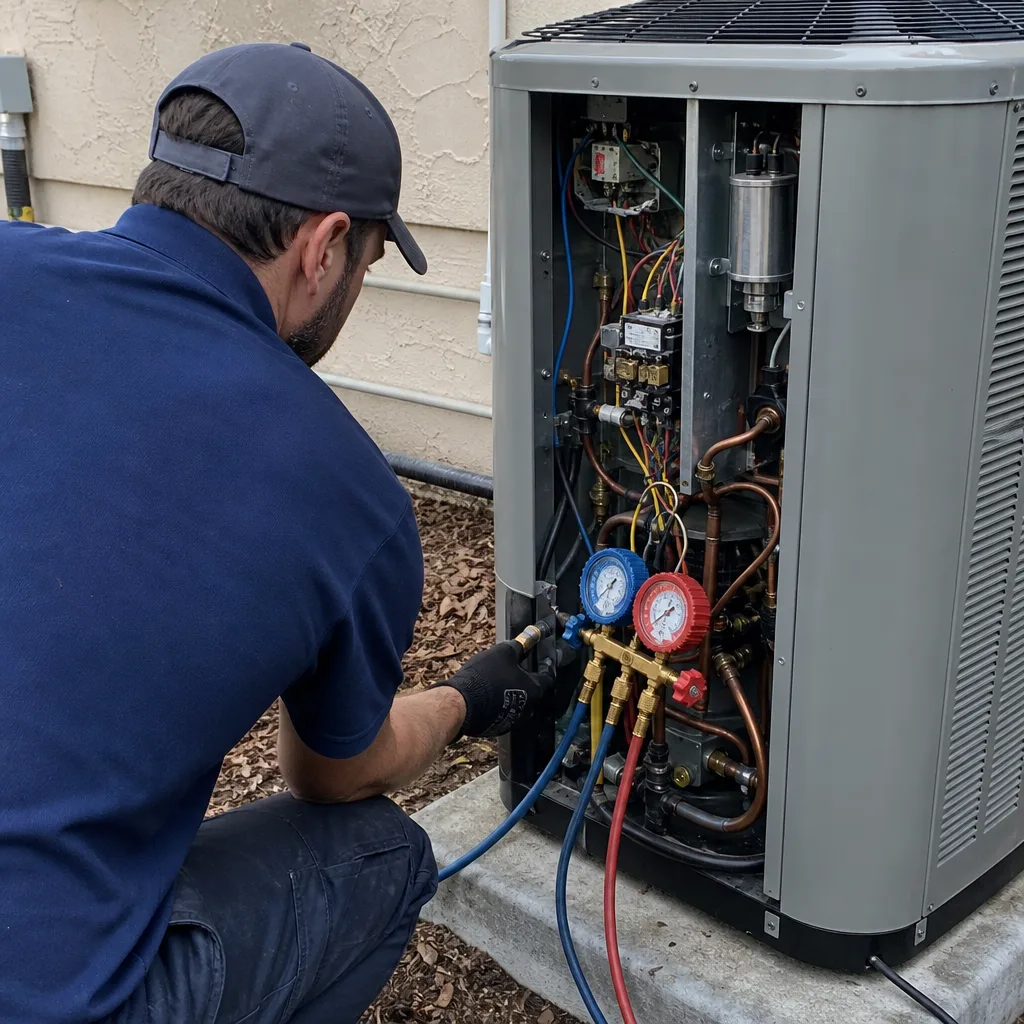
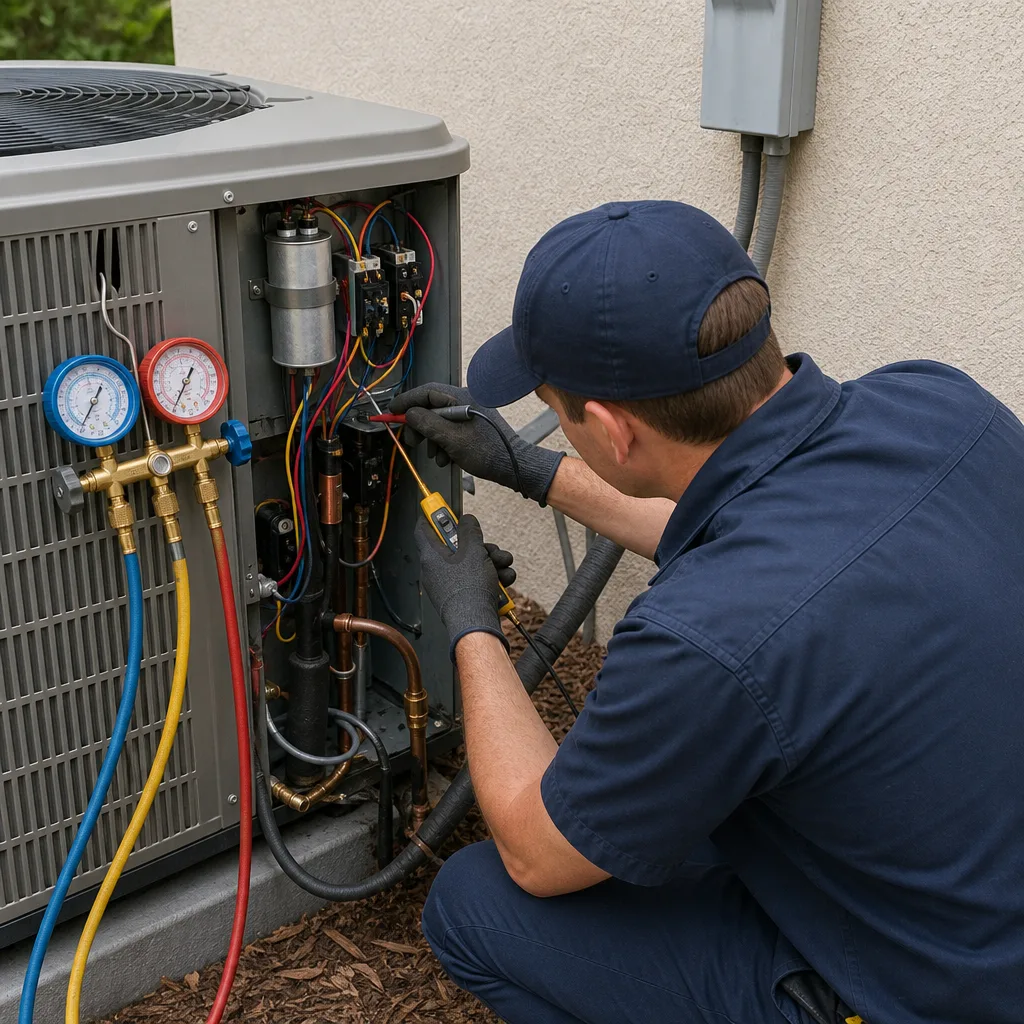
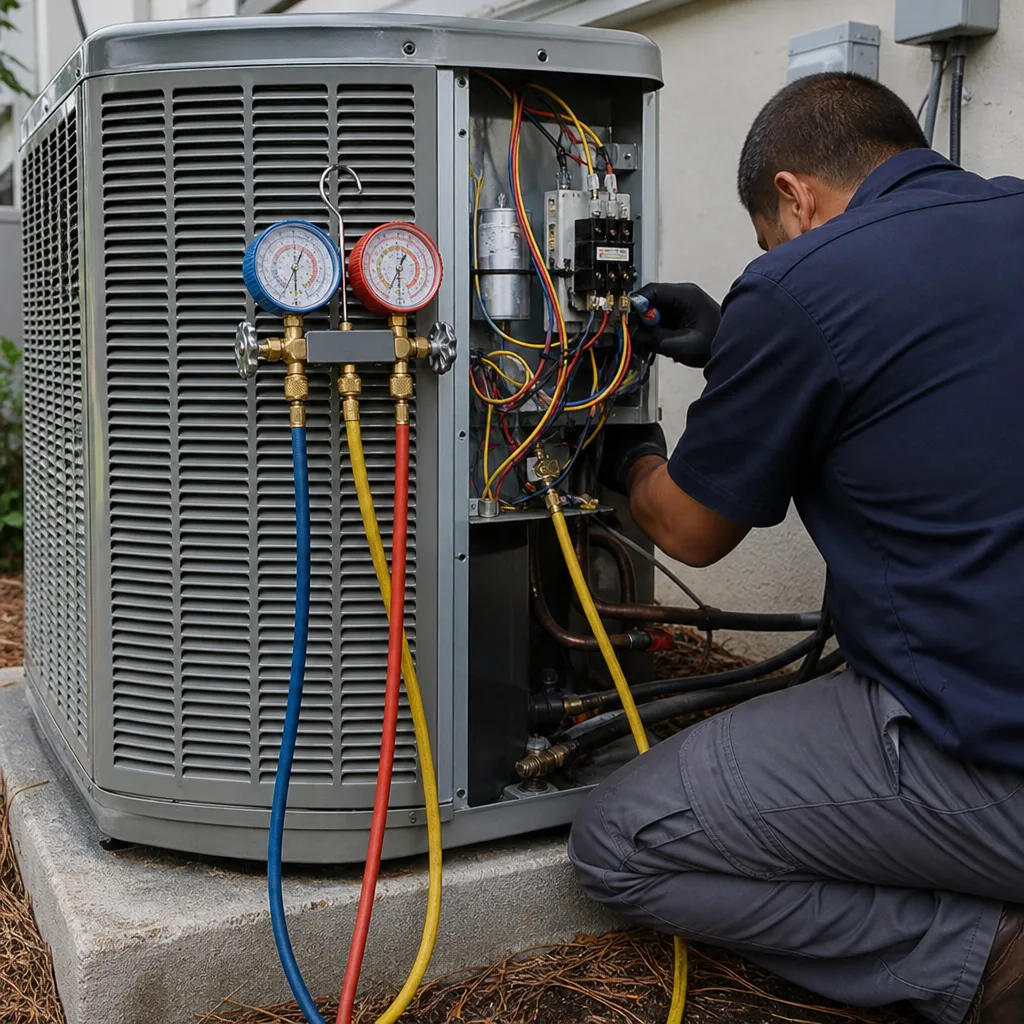
Every 6 months (spring and fall): Full professional maintenance visit. This is where a AC Maintenance in Jacksonville visit should include: coil inspection for early-stage corrosion (especially if you’re within three miles of the river or Intracoastal), condensate drain line clearing (Jacksonville’s humidity means algae grows in drain lines faster than almost anywhere), refrigerant level check, capacitor and contactor testing, and static pressure measurement. We do not pay our techs on what they sell during maintenance visits. They’re paid to find problems and document them, not to manufacture them.
Before hurricane season (May or early June): Inspect the outdoor condenser unit for loose panels, damaged fins, and secure mounting. Jacksonville’s afternoon thunderstorms can produce 50+ mph gusts, and a loose access panel turning into a missile is a real risk. Check that the condenser disconnect is accessible and not corroded.
After any major storm: If your outdoor unit sat in floodwater, even briefly, have the electrical components inspected before you turn it back on. Saltwater intrusion into a condenser or air handler is a corrosion accelerant. The damage may not show up for six months, but it’s happening.
Repair or Replace: A Straightforward Decision Framework
Every Jacksonville homeowner eventually faces the same question: put another $600 into a 12-year-old system or replace it for $8,000. The generic formula you’ll hear, multiply the repair cost by the age of the unit and replace if it exceeds $5,000, is too crude for Jacksonville, because our units age faster than the national average. A 12-year-old Jacksonville condenser has been through roughly 30,000 hours of cooling operation. That same unit in Chicago has seen maybe 15,000 hours. Age alone tells you almost nothing. Operating hours and corrosion state tell you everything.
Here’s the framework we recommend, in decision order:
- What’s the compressor’s condition? If the compressor itself has failed, the repair is $2,000 to $3,500 in Jacksonville depending on tonnage and brand. At that point, on a unit older than 8 years, replacement is usually the better financial decision, because the remaining life of the rest of the system is short.
- What’s the coil corrosion state? If a tech shows you pinhole leaks or corrosion on the condenser coil, replacing the coil on an old unit is throwing money at a system that will leak again elsewhere. The coil failure is a symptom, not the disease. If the unit is 7+ years old and the coil has failed, replace the system and spec a factory-coated coil this time.
- Is the system still on R-410A refrigerant? As of 2025, new systems use R-454B or R-32, and R-410A is being phased down. Repairing a leak on an R-410A system is still possible, but refrigerant prices are climbing and will keep climbing. If you have a leak and the system is 10+ years old, replacement is the forward-looking call.
- What would the new system save you? If your current unit is a 10 SEER system from 2008, moving to an 18 SEER two-stage unit cuts cooling electricity roughly 40% based on Jacksonville’s cooling hours and JEA rates. That’s $400-500 a year. Factor that into the replacement math, not just the repair bill.
If you’re facing a repair decision and want a straight answer, AC Repair in Jacksonville is our primary service page, and Furnace Repair in Jacksonville covers the heating side. Both start with a written price before any work begins, so you’re never deciding under pressure.
Common Mistakes to Avoid
- Sizing the unit based on square footage alone. A 2,000 square foot house in Riverside and a 2,000 square foot house in Mandarin have different loads because the Riverside house has older windows, less insulation, and higher humidity exposure from the river. A contractor who quotes a size without a Manual J calculation is guessing, and in Jacksonville, a wrong guess means a humid house for a decade.
- Skipping the duct inspection. We already covered this, but it bears repeating: a new high-efficiency system on undersized or leaky ducts is a $10,000 mistake. The single most common reason a brand-new Jacksonville system underperforms is that nobody measured static pressure before the install.
- Buying the cheapest coil. If you live near the St. Johns River or the Intracoastal, a non-coated coil will likely fail before the compressor does. The $300-500 factory coating option is the cheapest insurance you’ll ever buy on a $4,000 condenser.
- Ignoring humidity complaints. If a tech tells you the system is “cooling fine” but the house feels sticky, they’re only doing half the job. Humidity is a system performance issue, not a preference. A properly sized and configured system in Jacksonville should hold 50-55% relative humidity in summer.
- Running a “fan on” setting for better air circulation. This is a counterintuitive one. When the blower runs constantly, the moisture that collects on the coil when the compressor shuts off gets blown right back into your home. In Jacksonville’s humidity, that “fan on” setting can add 5-10% relative humidity to your indoor air. Leave the fan on “auto.”
- Ignoring the condensate drain until water appears. In Jacksonville, a clogged condensate line can cause water damage within hours because the system pulls so much moisture out of the air. A float switch installed in the drain pan is cheap insurance, and clearing the line should be part of every maintenance visit, not just the ones you remember to schedule.
See the difference
 Before
 After
After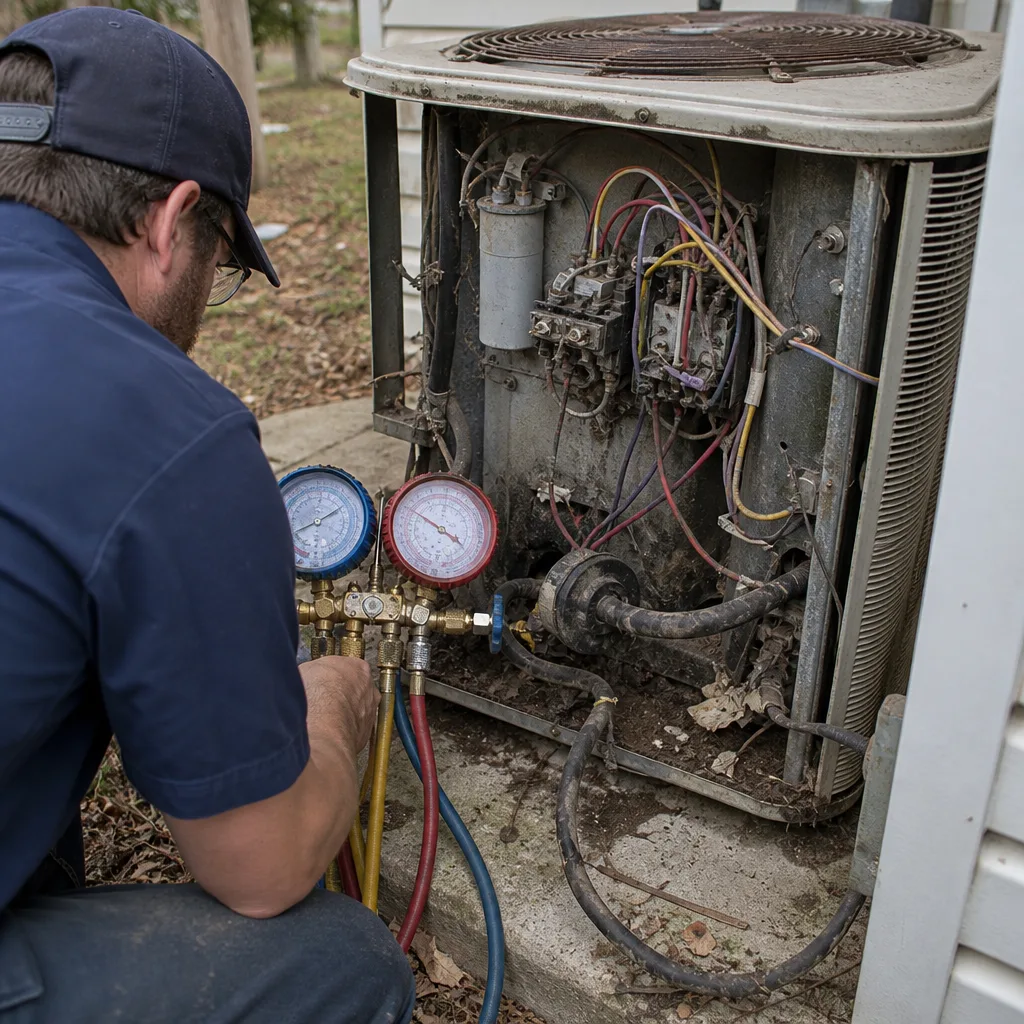 Before
 After
After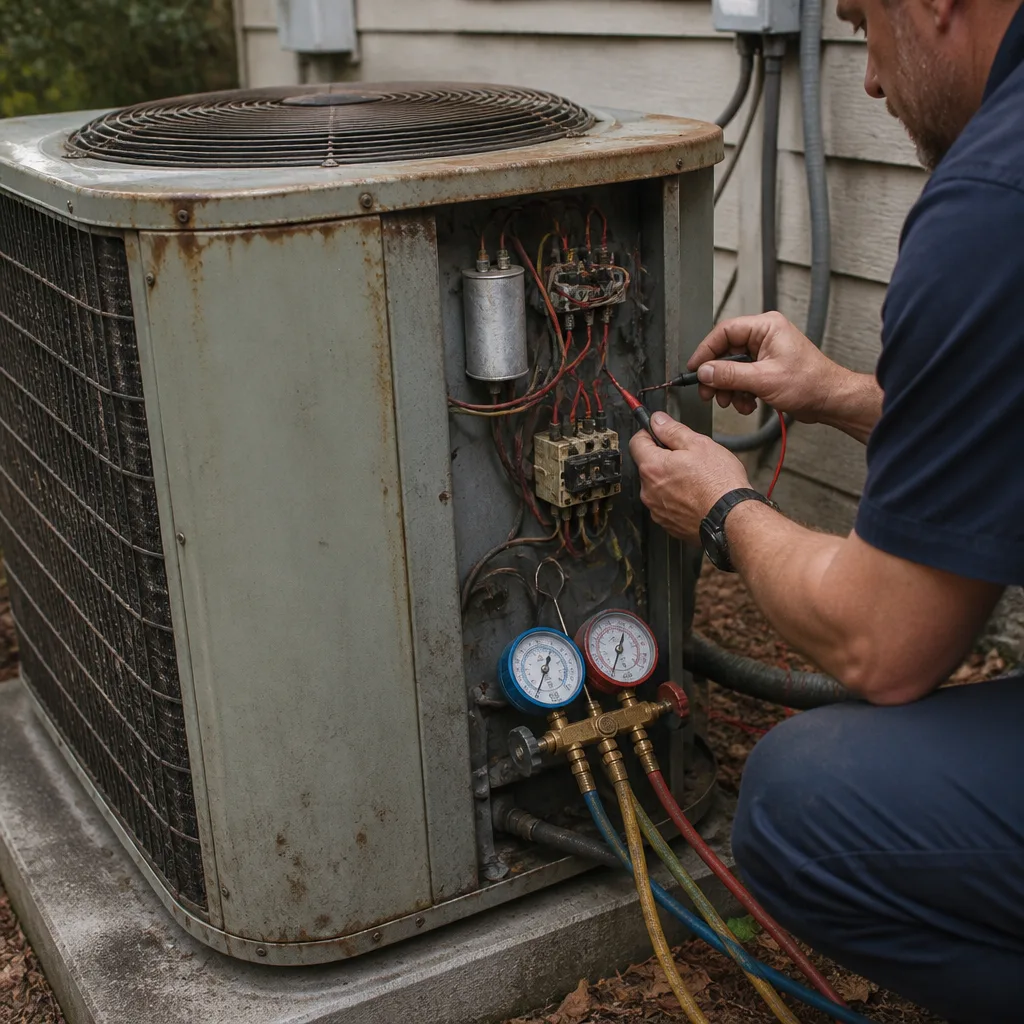 Before
 After
AfterWhen to Call a Professional
Some HVAC issues are obvious. The system won’t turn on. The breaker keeps tripping. Water is pooling under the air handler. But Jacksonville conditions create subtler problems that are still worth a professional look. If you notice the air feels sticky even when the thermostat is set to 74°F or below, that’s a dehumidification problem and it won’t fix itself. If you see white or green corrosion forming on the outdoor condenser fins, that’s the salt air working and the coating, if there ever was one, has been compromised. If one room stays consistently 5°F warmer than the rest of the house, your ducts are telling you something. And if your electric bill jumps 30% in a month without a corresponding weather change, the system is working harder than it should. Brandt HVAC Co Jacksonville offers free estimates in Jacksonville. Call (904) 456-0205, or start with a visit to our Brandt HVAC Co Jacksonville home page to see how we work.
Frequently Asked Questions
An HVAC system in Jacksonville typically lasts 10 to 14 years, compared to 15 to 20 years in drier climates, because salt air corrosion and 3,000+ annual cooling hours take a measurable toll on components. Systems within three miles of the St. Johns River or Intracoastal Waterway trend toward the low end of that range unless the coil is factory-coated for corrosion resistance. Call (904) 456-0205 for an assessment of your specific system’s condition and remaining life.
A full system replacement in Jacksonville typically runs $7,500 to $14,000 for both the condenser and air handler, installed, depending on SEER rating, tonnage, and brand. A 3-ton 14 SEER system starts around $4,800, while a two-stage 18 SEER system from Carrier, Trane, or Lennox runs $8,500 to $11,000. Every Brandt HVAC Co Jacksonville quote includes a written price before any work begins. Call (904) 456-0205 for a free estimate with real numbers for your specific home.
A properly sized two-stage or variable-speed AC system will handle Jacksonville’s humidity in most cases without a separate dehumidifier, because these systems run longer at lower capacity and remove more moisture per cycle. A whole-home dehumidifier makes sense for homes with high ceilings, older windows, or systems that short-cycle. If your house feels sticky at 74°F, the AC is not doing its job and a professional should measure your indoor humidity and static pressure before recommending any add-on equipment.
Most AC repairs in Jacksonville run $180 to $650 depending on the part, with common fixes like capacitor replacement at $180-300, condensate drain line clearing at $100-200, and contactor replacement at $180-250. Refrigerant recharge runs higher, typically $350-600 for R-410A depending on how many pounds are needed, but a recharge without finding and fixing the leak is a temporary patch. Brandt HVAC Co Jacksonville provides a written price before any work starts and a written guarantee on every repair. Call (904) 456-0205 for an exact quote.
Often yes, especially in Jacksonville where a mid-summer failure means days or weeks without cooling in a house that’s also holding 70% humidity. The best time to replace is during spring or fall when demand is lower, install scheduling is more flexible, and you’re not making a rushed decision in a heat emergency. If your system is over 10 years old, uses R-410A refrigerant, or shows signs of coil corrosion, a proactive replacement plan saves money and stress compared to emergency replacement.
Yes. Brandt HVAC Co Jacksonville answers the phone with a live person 24 hours a day, 7 days a week, including nights and weekends, and we schedule same-day service for most repair calls in Jacksonville. Every repair begins with a written price before work starts, and every repair includes a written guarantee. Call (904) 456-0205 and a live person will answer, no automated phone tree. Your AC Repair in Jacksonville call starts with an actual conversation.
The Bottom Line
Jacksonville’s climate is an HVAC stress test: salt air attacking your condenser from outside, 76°F dew points challenging your equipment’s dehumidification capacity from inside, and a cooling season that never really ends. Standard advice written for inland Florida doesn’t account for any of this. The decisions that actually matter here are specific: factory-coated coils on coastal properties, two-stage or variable-speed equipment sized with a real load calculation, duct measurements that confirm the system can breathe, and a maintenance schedule built around Jacksonville’s actual conditions. And when you open the door to a technician, that person should be verified, badged, and expected. Certainty about who’s walking through your door is not a luxury. It’s the baseline. For more guides & resources on keeping your Jacksonville home comfortable, visit our blog. Written by Devin Marlowe, Owner at Brandt HVAC Co Jacksonville, serving Jacksonville since 2003.