
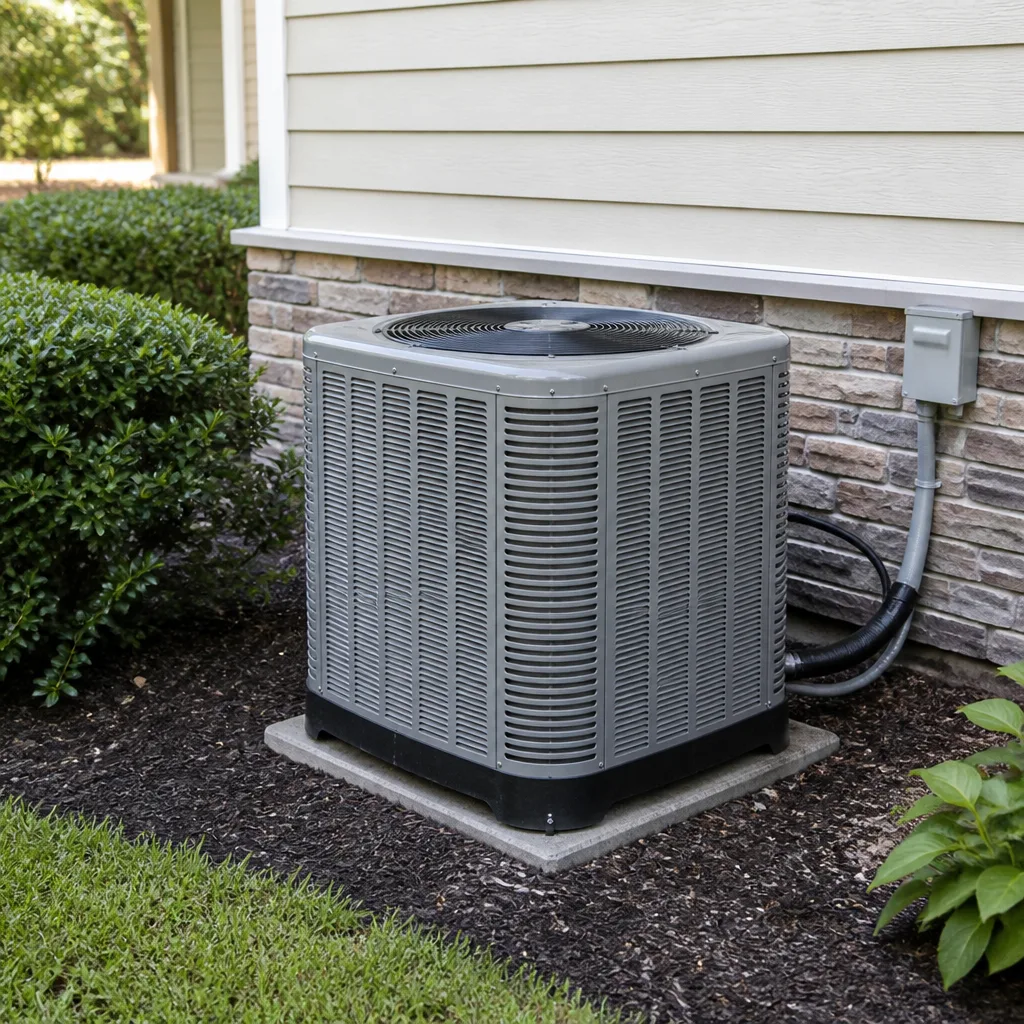
 AC repair
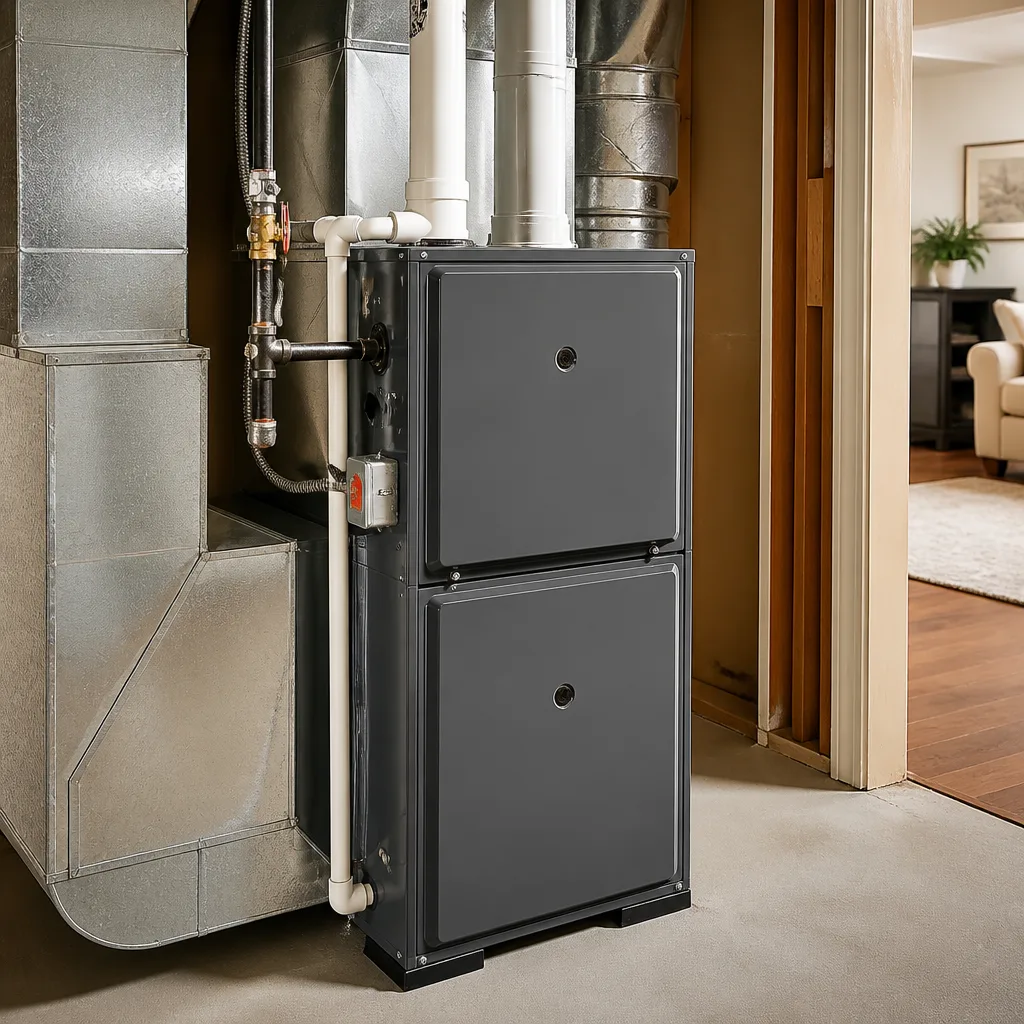 Furnace & heating
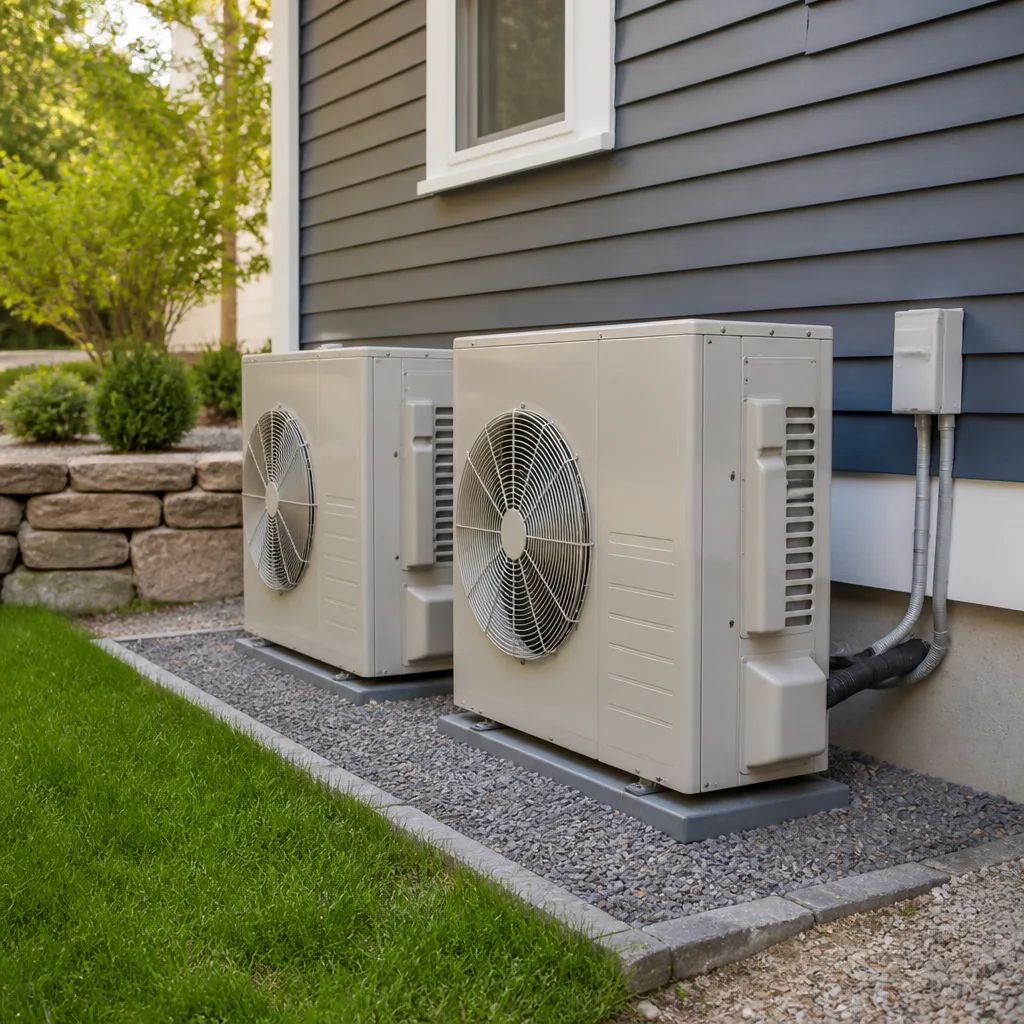 Heat pumps
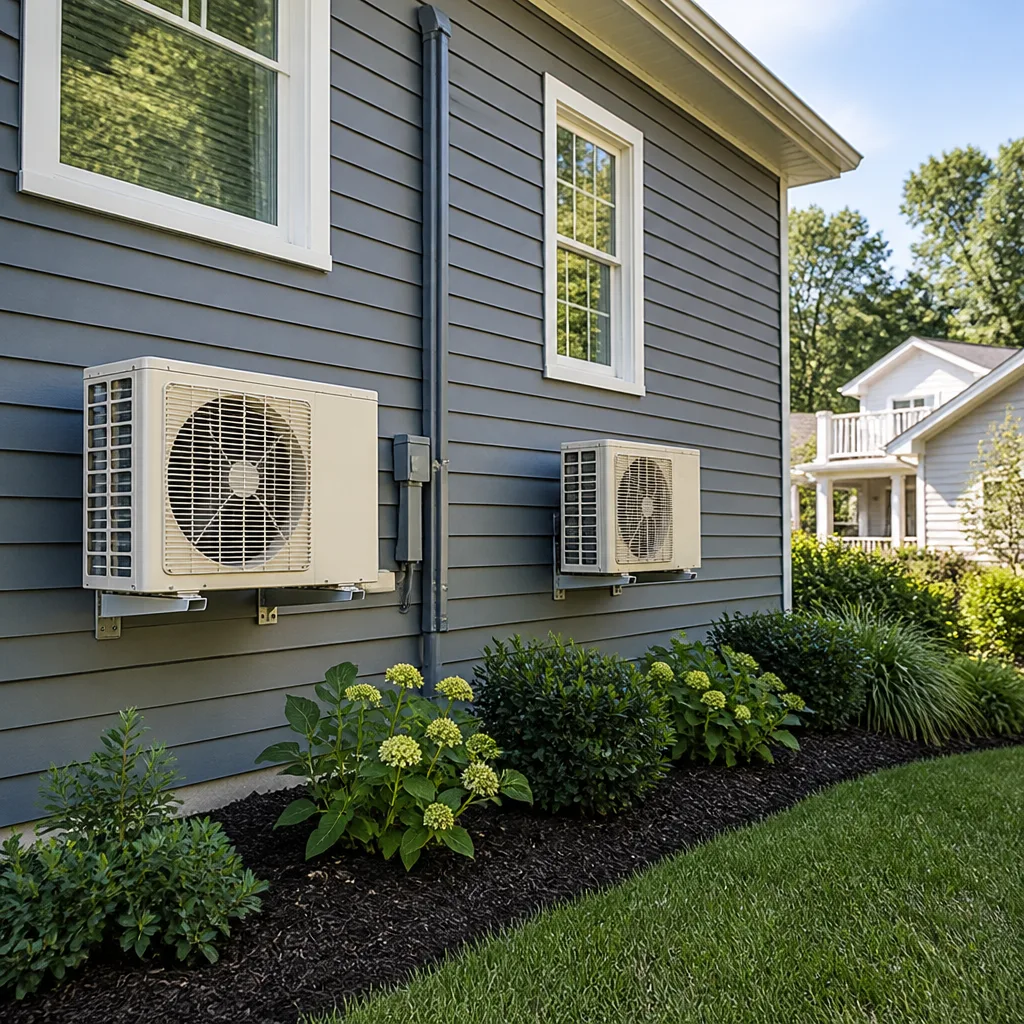 Ductless mini splits
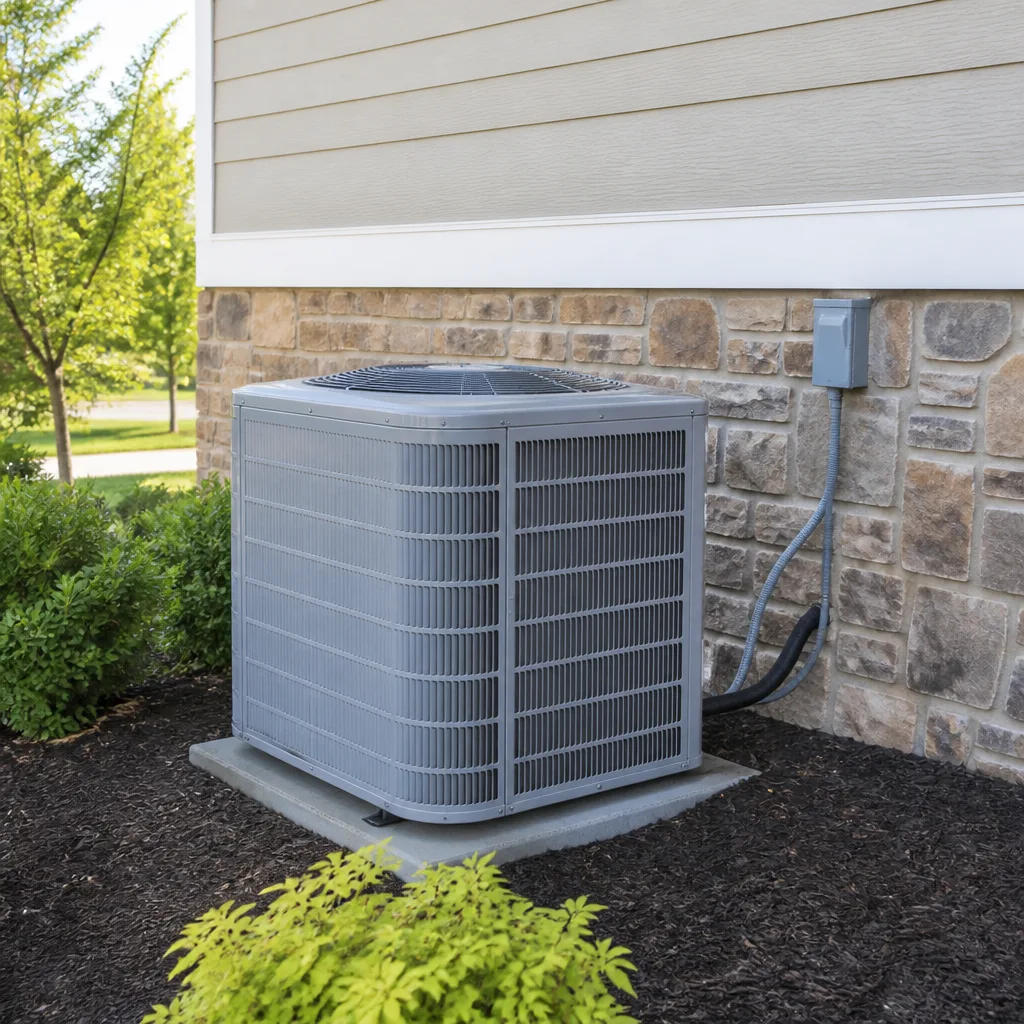 Carrier
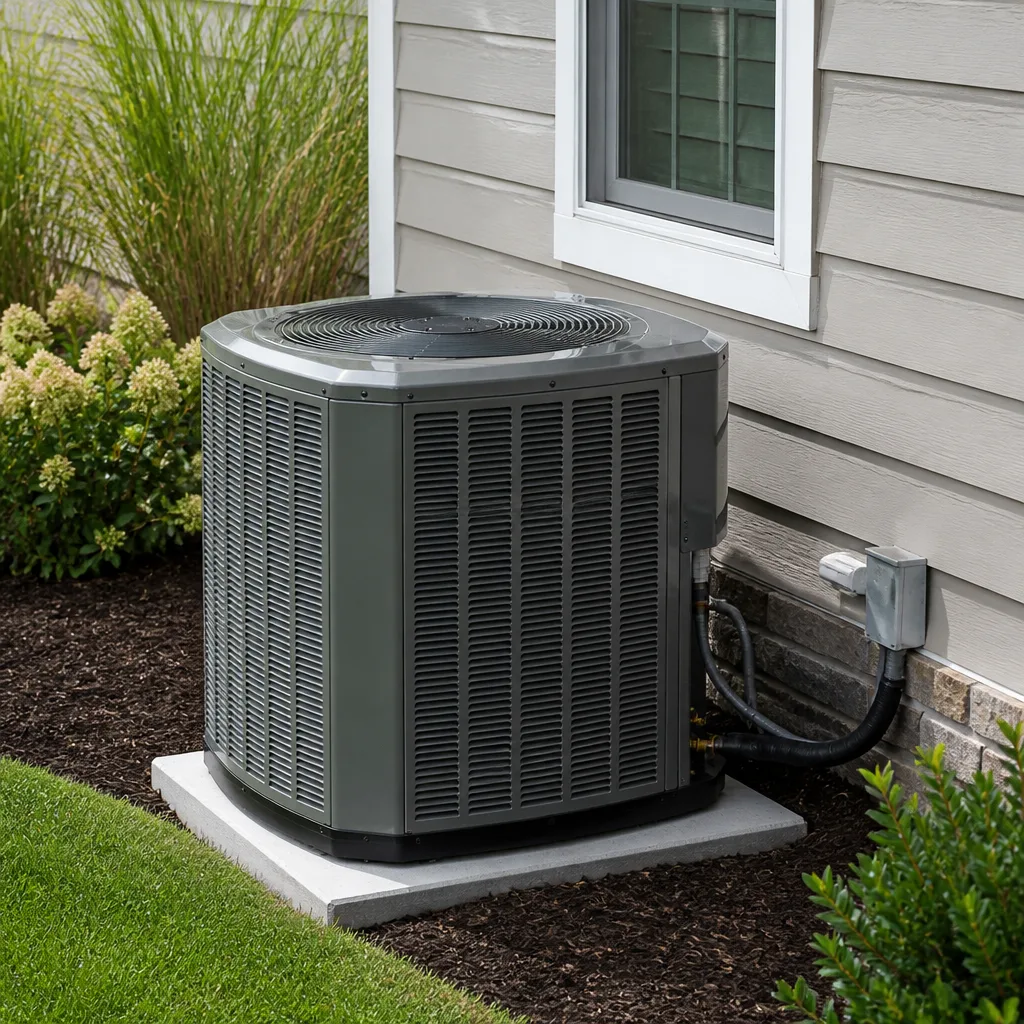 Trane
Trane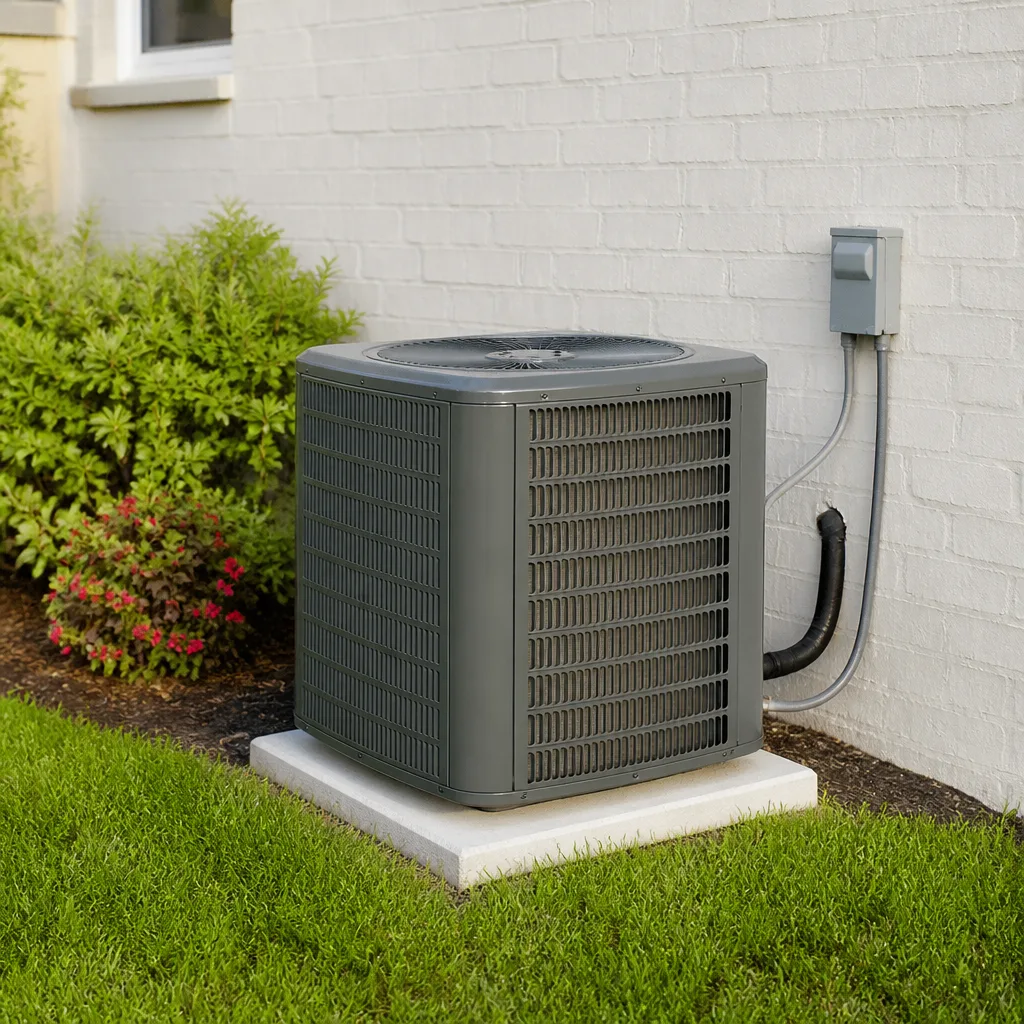 Goodman
Seasonal tune-up and full diagnostic on your Carrier, Trane, or Goodman system - readings shown to you before any repair is proposed
Diagnosis first, numbers second - you approve the repair price before a single part goes in.
Get your free estimateAmerican Standard Capacitor Replacement: The Jacksonville Owner’s Guide
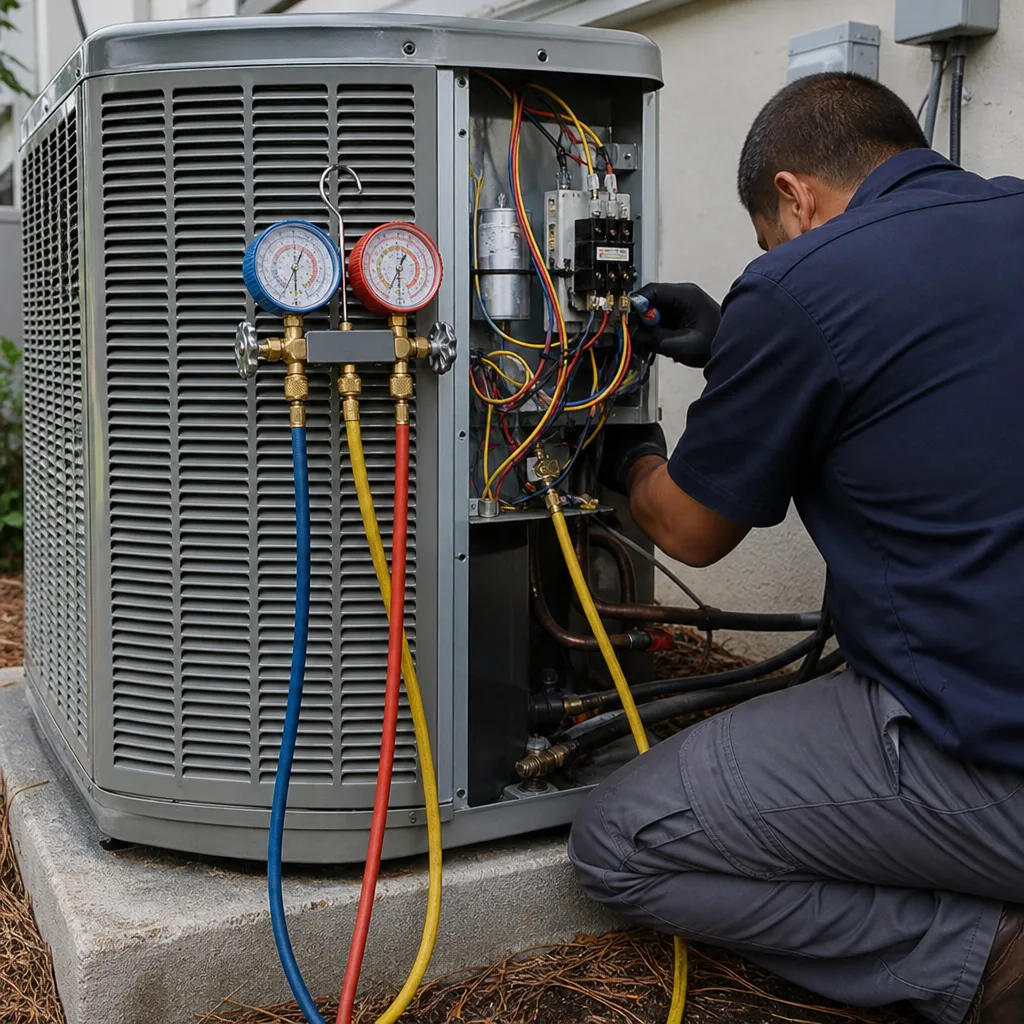
We replace American Standard capacitors throughout Jacksonville, and most jobs run between $180 and $340 installed, parts and labor included. A capacitor is the small cylinder inside your outdoor condenser or air handler that gives the compressor and fan motor the electrical jolt they need to start and keep running. When it fails, you’ll usually notice the outside unit humming but not starting, warm air blowing from your vents, or a system that trips its breaker repeatedly. In Jacksonville’s heat, a dead capacitor is a repair you don’t want to sit on. We keep common American Standard capacitor ratings on our trucks so most calls are handled same-day.
The short version: if your American Standard unit hums but won’t kick on, there’s a very good chance the capacitor is the culprit. It’s one of the most common AC failures in Jacksonville, and it’s also one of the least expensive to fix when caught early. Call us at (904) 456-0205 and we’ll confirm the diagnosis with a meter before quoting you a written price.
Which American Standard Models This Applies To
American Standard condensers and air handlers across the Silver, Gold, and Platinum series all use capacitors, though the exact rating depends on your unit’s tonnage and compressor type. The Silver 14 and Gold 17 lines, which are common in Jacksonville neighborhoods like Mandarin, Arlington, and Orange Park, typically use dual-run capacitors rated from 35/5 to 70/10 microfarads (µF). The Platinum series with two-stage compressors often requires a capacitor with slightly different voltage tolerance, usually 440 VAC rather than the 370 VAC found on older models.
The part you need is printed on the side of the existing capacitor itself: a number like “45/5 µF, 440 VAC.” That first number is the compressor side, the second is the fan side. Matching that exactly matters more than matching the American Standard part number, because the same capacitor is used across multiple model years. We carry OEM American Standard replacement capacitors as well as quality aftermarket equivalents from AmRad and Titan. For Jacksonville’s humidity and frequent cycling, we lean toward the AmRad units when available – they’re built with thicker dielectric film and tend to outlast the factory part in our climate. If you’re reading a faded label and can’t make out the rating, we can look it up by the model and serial number on the data plate once we’re on site.
One compatibility gotcha worth knowing: American Standard changed capacitor mounting brackets on some condensing units around the 2018 model year. The capacitors are electrically identical, but the physical size shifted slightly. If you order a part online without checking your bracket, you might get one that doesn’t seat properly. We match the form factor before we leave the shop, so there’s no second trip.
Styles & brands we work with
Signs Your American Standard Capacitor Replacement Is Failing
- Outside unit hums but the fan doesn’t spin. That hum is the compressor trying to start without enough stored voltage. A failed capacitor accounts for a huge share of these calls in Jacksonville. When we see it, we hear the same description almost every time: “it sounds like it’s trying, but nothing happens.”
- Warm air from the vents while the indoor blower runs. The air handler is pushing air, but the condenser outside isn’t doing its half of the job. This can also point to a contactor or compressor issue, which is why we meter the capacitor before recommending anything.
- Visible bulging, leaking, or a swollen top. A healthy capacitor is a smooth cylinder. In Florida’s heat, the internal electrolytic fluid expands and pushes the top outward. This is the most reliable visual sign. If the top looks domed instead of flat, the capacitor is done.
- AC runs for a few minutes, then shuts off. A weak capacitor can’t keep the motor running under load. The system starts, struggles, and trips a thermal limit. On a 95-degree Jacksonville afternoon, this one shows up fast because the unit cycles harder.
- Breaker trips when the AC kicks on. A capacitor that has shorted internally can draw excessive current at startup. This is a safety concern, not just a comfort issue. If your breaker trips more than once, stop resetting it and call us – you don’t want to cook a compressor over a $30 part.
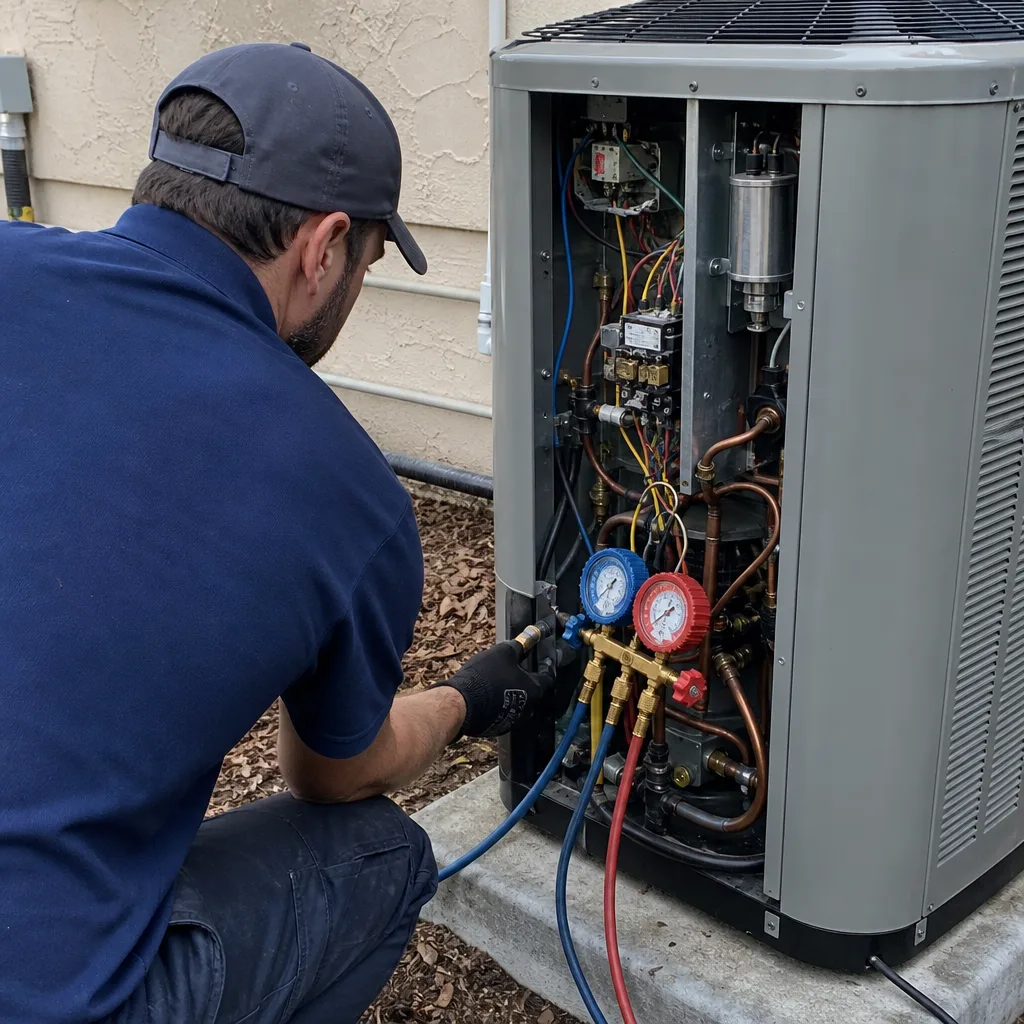
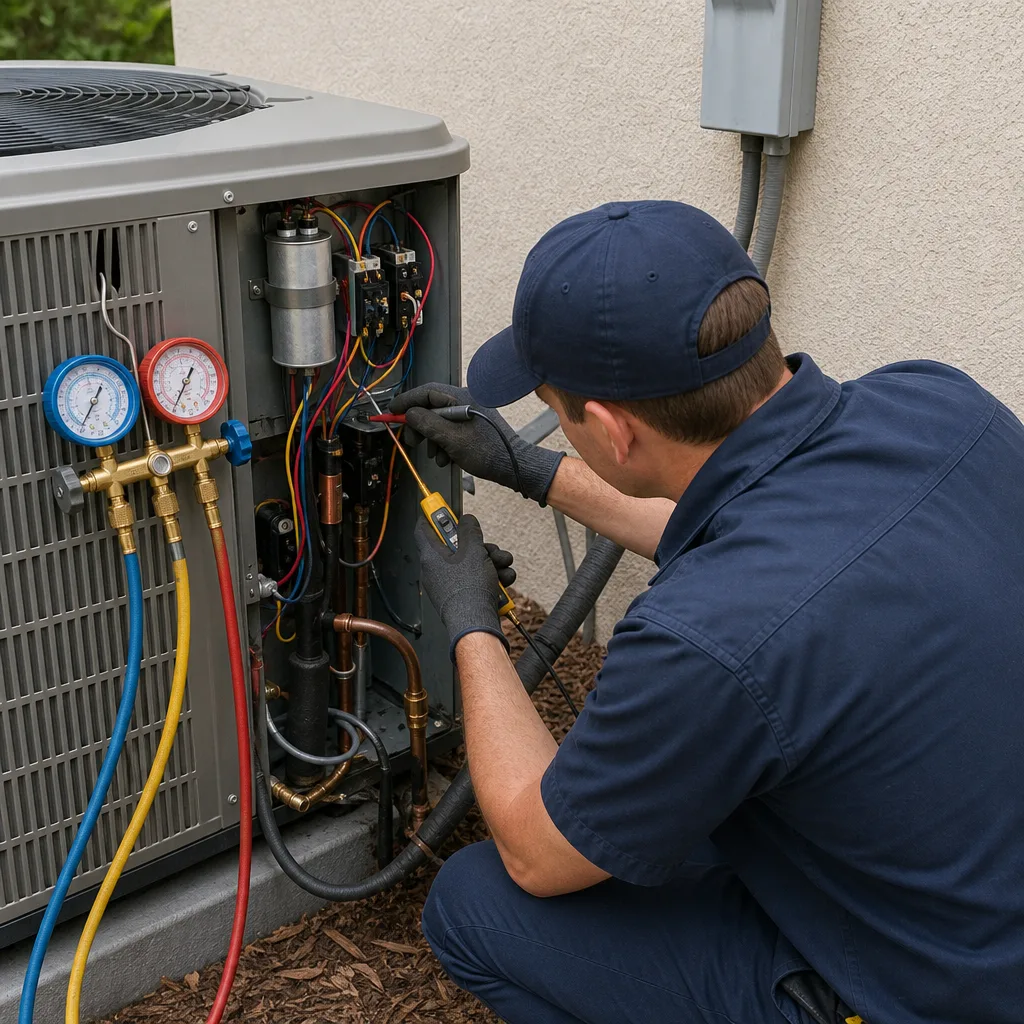
See the difference
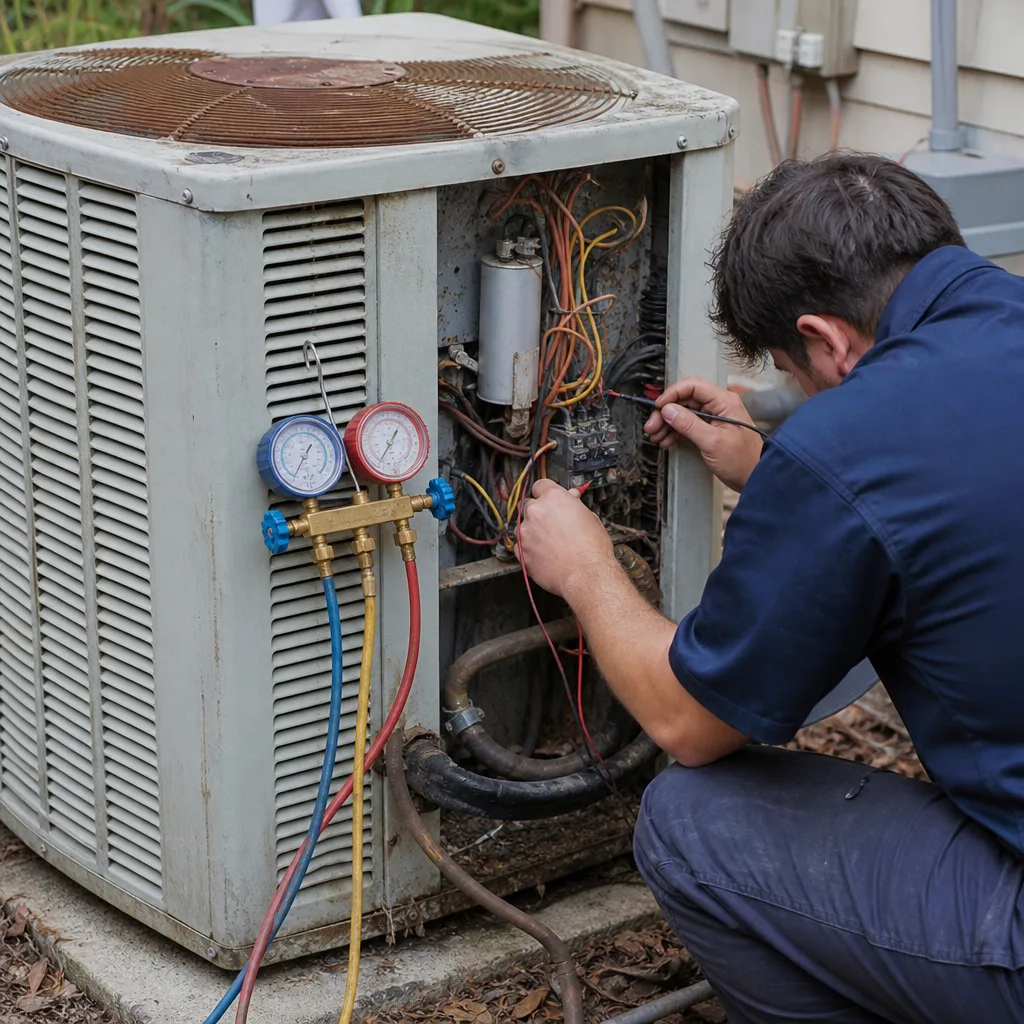 Before
 After
After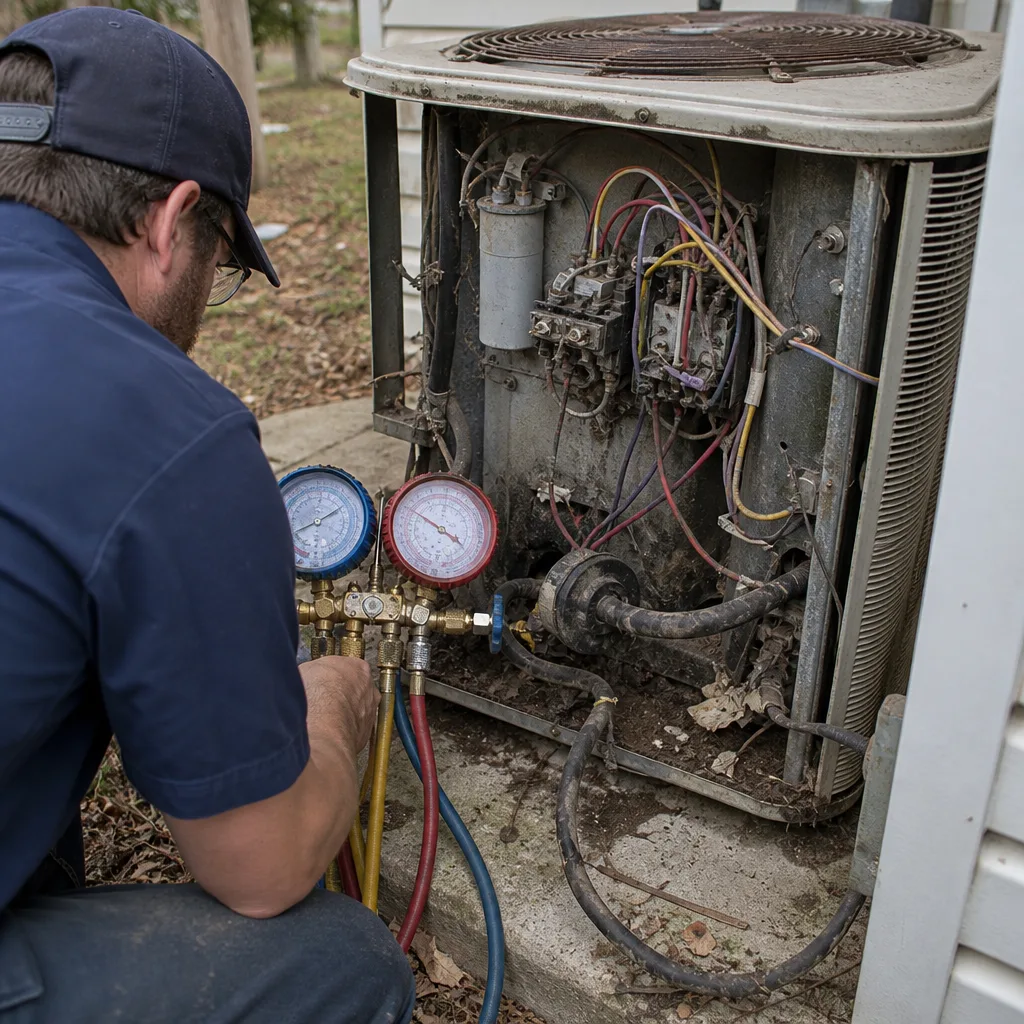 Before
 After
After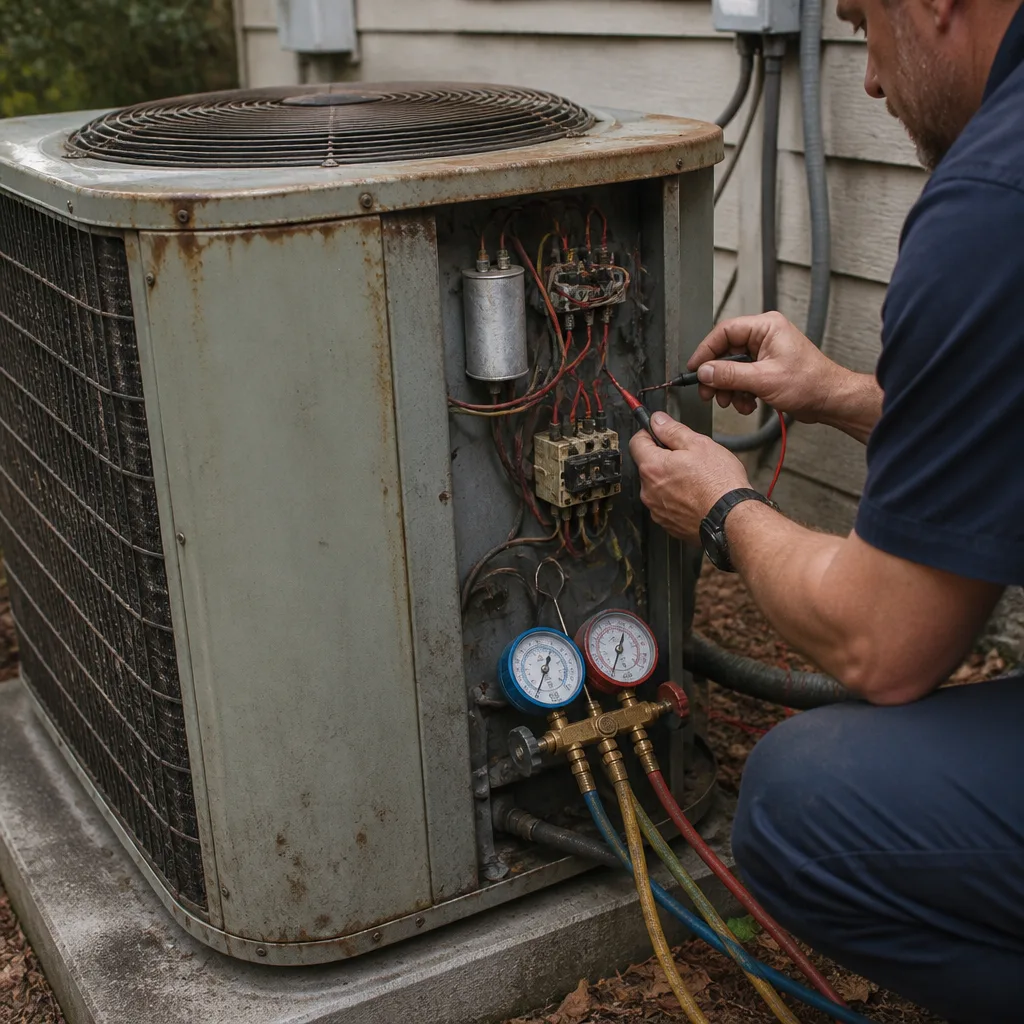 Before
 After
AfterReplacement Cost & What’s Included
In Jacksonville, American Standard capacitor replacement runs $180 to $340 installed for most single-capacitor jobs. The part itself is typically $25 to $70 depending on the microfarad rating and whether we’re using OEM or a premium aftermarket equivalent. The rest is labor, the service call, testing, and our written guarantee. Dual-run capacitors at the higher end of the rating spectrum, or specialty capacitors for two-stage Platinum units, push toward the upper end of that range. If your system needs both the compressor capacitor and a separate fan capacitor, add roughly $60 to $100.
Here’s what you get for that number: we test the old capacitor with a capacitance meter, confirm the failure, match the replacement to your exact rating and form factor, install it, and test the system under load. You get a written price before any work starts, no exceptions. You get a written guarantee on the repair, good for 365 days. If the capacitor or the installation fails inside that year, we come back and make it right at no charge. That’s the 365-Day Done Right Promise, and it applies to every capacitor we replace in Jacksonville.
We don’t charge overtime for evening or weekend calls, and we don’t add a surcharge for same-day service. The price we quote is the price you pay.
DIY or Call Us?
I’ll be straight with you: a capacitor stores enough voltage to stop your heart, even with the power off. Devin Marlowe learned that lesson early in his time at the trade school bench, and he’s drilled it into every tech who rides with us. Before you touch anything, you’d need to discharge the capacitor safely with an insulated resistor, confirm the disconnect is fully open, and verify no residual charge remains. We’ve also seen homeowners install a capacitor with the wrong microfarad rating because a website said it was “close enough.” It isn’t. An oversized capacitor burns out the compressor windings over time, and a compressor replacement starts around $1,200 and climbs from there.
What you can safely do: look through the condenser’s top grille for a swollen or leaking capacitor, write down the numbers on the label if you can read them, and call us. That’s it. Don’t open the panel, don’t poke anything, don’t try to “jump start” the fan with a stick. Call (904) 456-0205. A live person answers, day or night, and we’ll get a tech to you with the right part and the right equipment.
FAQs
In Jacksonville’s climate, expect 5 to 10 years from a capacitor. The heat and humidity accelerate the breakdown of the internal dielectric fluid. Units that run hard through our long summers tend to burn through capacitors faster than the same unit would in a milder climate. We see plenty of Jacksonville units lose their first capacitor at the 5 or 6 year mark, particularly if the condenser sits in full afternoon sun. If your outside unit is getting direct sun all day, that’s a lifespan killer for capacitors. Call (904) 456-0205 and we’ll check yours with a meter to see where it stands.
No. A capacitor is a sealed, disposable electrical component. There’s no practical repair for a swollen, leaking, or weak capacitor. The fix is a new capacitor matched to your unit’s exact rating. The good news is that it’s one of the least expensive AC repairs you’ll ever pay for, which is why we always tell Jacksonville homeowners to take care of it the day the symptoms appear.
Once we’re at your unit with the right capacitor, the physical swap takes 20 to 30 minutes. That includes discharging the old capacitor safely, removing it, installing the new one, making the connections, and putting everything back together. Most calls take an hour total when you figure in testing the system, checking the contactor while we’re in there, and making sure the compressor is drawing normal amps. Call us at (904) 456-0205 and we’ll give you an honest arrival window when you book.
Yes. We carry the most common American Standard dual-run capacitor ratings, from 35/5 up to 70/10 microfarads in both 370 and 440 VAC, plus separate fan capacitors for older split-system air handlers. We also stock compatible capacitors for Carrier, Trane, and Lennox units. If your unit needs a rating we don’t have on hand – it’s rare but happens with some two-stage Platinum models – we can usually have the exact part the same day.
Written by Devin Marlowe, Owner, Brandt HVAC Co Jacksonville at Brandt HVAC Co Jacksonville, serving Jacksonville and nearby areas.