
 AC repair
 Furnace & heating
 Heat pumps
 Ductless mini splits
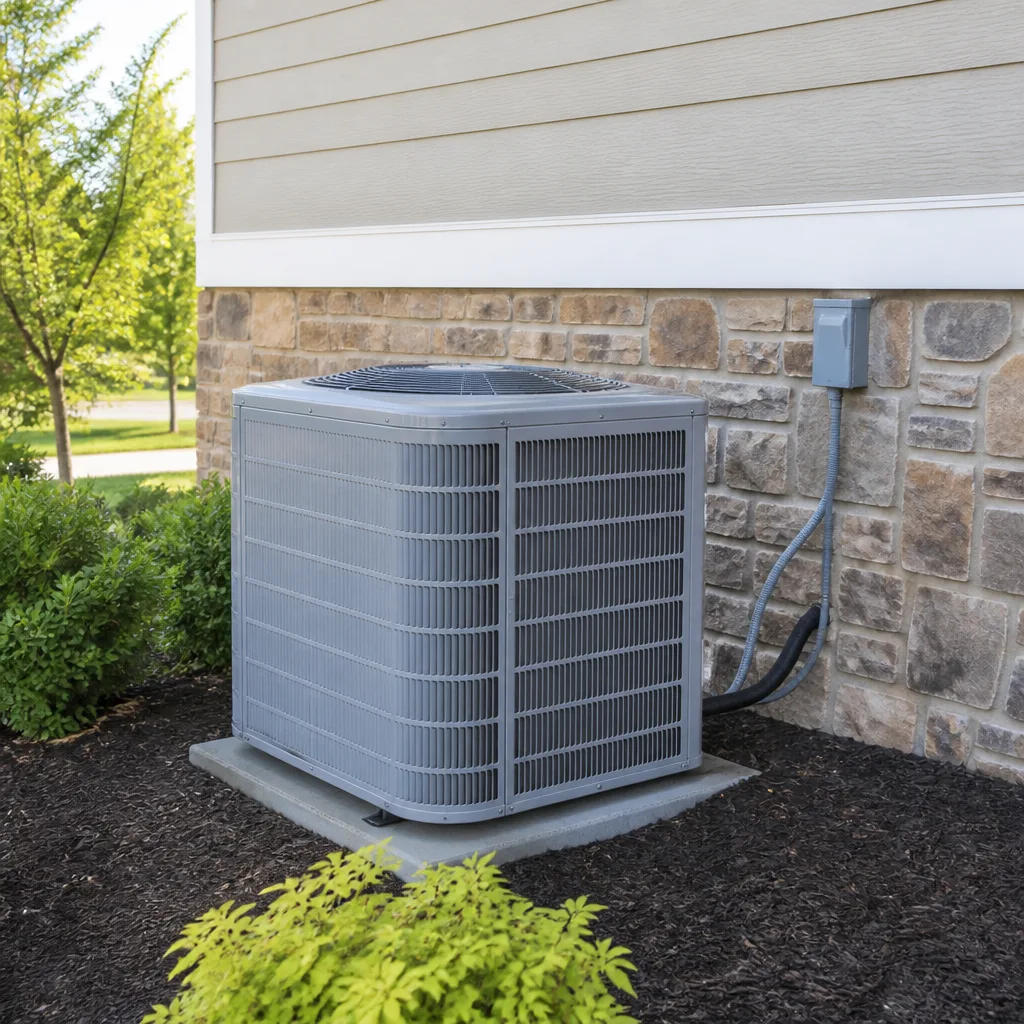 Carrier
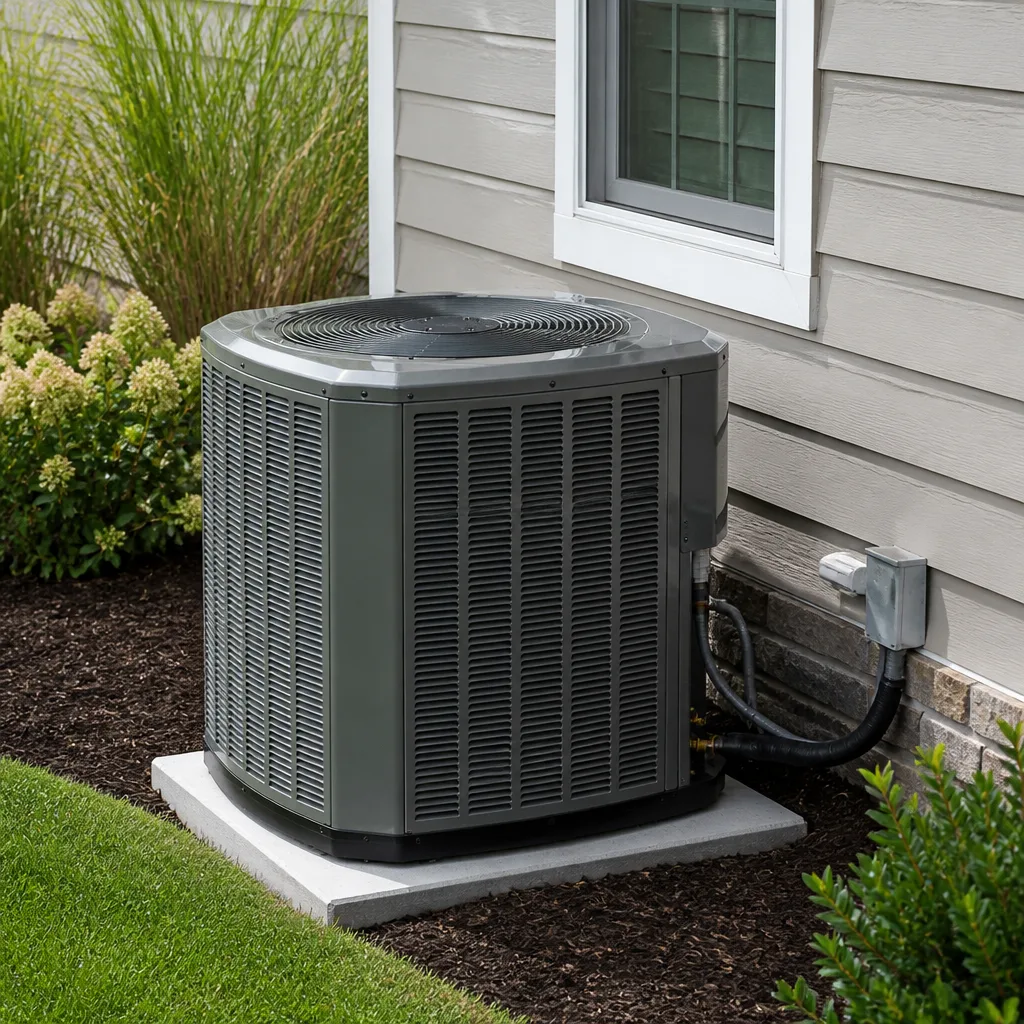 Trane
Trane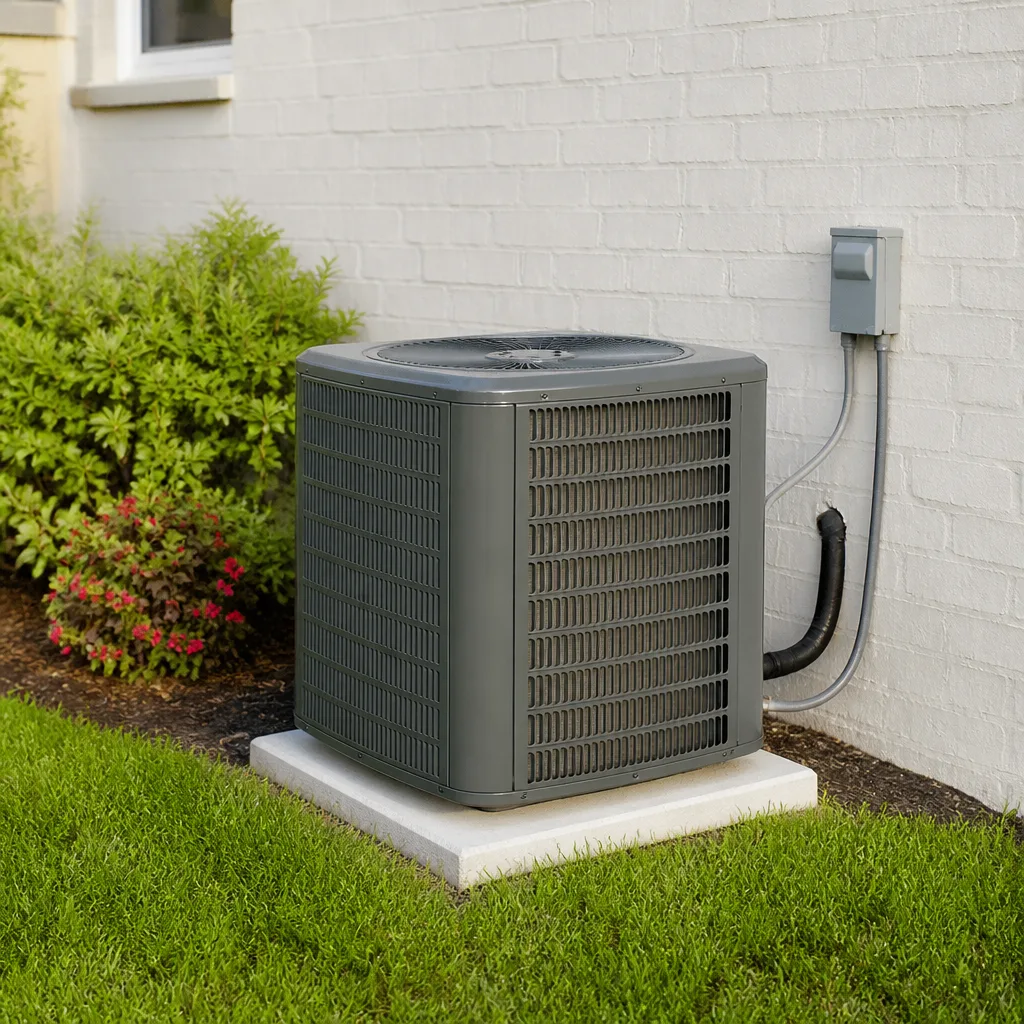 Goodman
Seasonal tune-up and full diagnostic on your Carrier, Trane, or Goodman system - readings shown to you before any repair is proposed
Diagnosis first, numbers second - you approve the repair price before a single part goes in.
Get your free estimateCarrier Ductwork Repair: The Jacksonville Owner’s Guide
Carrier ductwork repair in Jacksonville typically runs $150 – $650 installed, depending on whether we’re sealing a separated joint, replacing a crushed flex run, or rebuilding a plenum that’s been sweating in a Riverside attic for twenty years. Most duct problems we see are repairable same-day, and we carry Carrier-compatible duct materials, mastic, and sealants on our trucks. You’ll usually notice the problem first as one room that never cools, a dusty smell when the air kicks on, or a utility bill that climbed without a matching change in the weather.
Ductwork is the part of your Carrier system nobody thinks about until it misbehaves. The air handler can be running perfectly, the condenser outside can be spotless, and you’ll still get a hot master bedroom if the duct run feeding it has split open. In Jacksonville’s humidity, failed ductwork causes a second problem most owners don’t expect: condensation. When warm, moist attic air gets pulled into a leak on the return side, it meets cold duct surfaces and drips. We’ve seen ceilings in Arlington and Mandarin with water stains that traced back to nothing but a disconnected return fitting.
Here’s the straight version: your Carrier equipment is only as good as the duct system connected to it. A 16 SEER condenser pushing through torn, undersized, or poorly sealed ducts performs like an 8 SEER unit. We fix the ducts so the equipment you already paid for actually does its job.
Which Carrier Models This Applies To
The ductwork in your home is almost never made by Carrier itself. Carrier manufactures the equipment, the air handler, the condenser, the furnace, and the duct system is typically fabricated and installed by a local contractor during construction or a past retrofit. That’s an important distinction, because it means your ductwork repair doesn’t hinge on Carrier part numbers the way a control board replacement does. It hinges on measurements, materials, and getting the airflow math right for your specific Carrier equipment.
What matters for compatibility is the capacity of your Carrier system and the design of the duct runs. A Carrier Infinity series with a variable-speed air handler is more sensitive to static pressure than a base Comfort series single-stage unit. If your ductwork was undersized for the original system and someone later upgraded you to a larger Carrier heat pump, we routinely find the return side pulling more air than the existing duct can deliver. That restriction shows up as a whistling return, a motor running harder than it should, and utility costs that don’t match the efficiency rating on the box.
Here’s a gotcha we see often in Jacksonville: older homes with Carrier equipment retrofitted into pier-and-beam construction or attic spaces originally designed for gravity heat. The duct sizes were never resized for the new equipment. Before we patch a duct in that situation, we measure the full run and calculate whether the repair will actually solve the problem or just move the restriction somewhere else. Sometimes the honest answer is that three duct sections need resizing, not one patch. We’ll tell you that up front, with the cost difference on paper before you agree to anything.
On the materials side, we use reinforced flex duct rated for Florida attic temperatures, rigid galvanized pipe where it makes sense, and mastic-sealed joints, not just tape. Silver tape dries out in a Jacksonville attic within five years. Mastic, applied correctly, outlasts the duct itself. For OEM versus aftermarket: there’s no meaningful Carrier-brand duct material to buy, and anyone telling you otherwise is selling a label. What matters is the R-value of the insulation, the gauge of the inner liner, and whether the installer pulled it tight and sealed it properly.
Styles & brands we work with
Signs Your Carrier Ductwork Is Failing
- One room that never reaches temperature. A separated or crushed duct run feeding that room means conditioned air is dumping into the attic or wall cavity instead of the register. The air handler is working, the air just isn’t arriving.
- Dust on surfaces within days of cleaning. A return-side leak pulls unfiltered attic or crawlspace air directly into your Carrier system, bypassing the filter entirely. You’re breathing whatever is in that attic, and the evaporator coil is coating itself in the same dust.
- Musty smell when the blower runs. Warm, humid Jacksonville air entering through a return-side leak creates condensation inside the duct. That moisture feeds mildew in the insulation liner, and the smell circulates through the house every time the fan starts.
- Visible water stains on ceilings below the attic. This is the symptom that sends people calling us fastest, and it’s usually condensation, not a plumbing leak. Cold supply air inside a duct running through a hot attic causes sweating wherever insulation is thin or missing.
- Utility bill climbing with no weather change. A system leaking 20 – 30% of its conditioned air into the attic runs longer to satisfy the thermostat. You’re paying to air-condition the attic, and the attic doesn’t care.
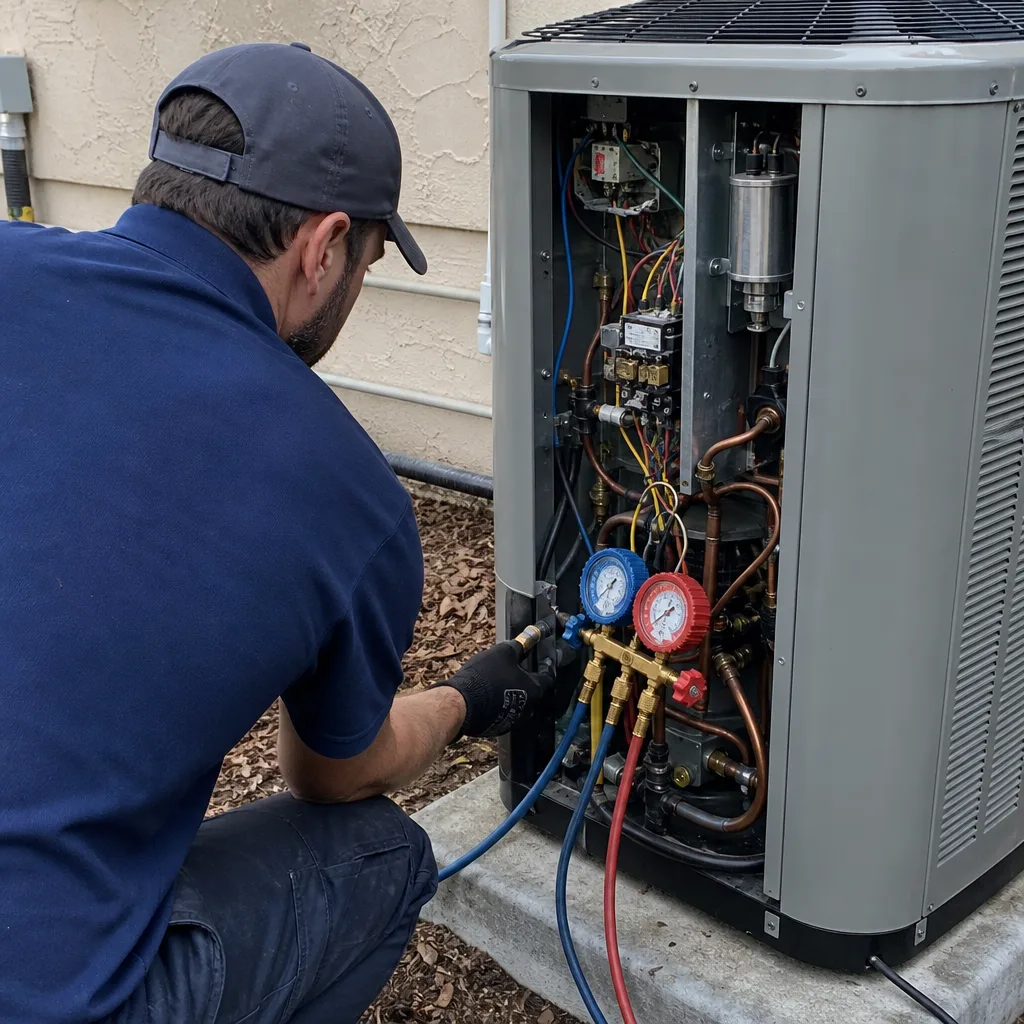
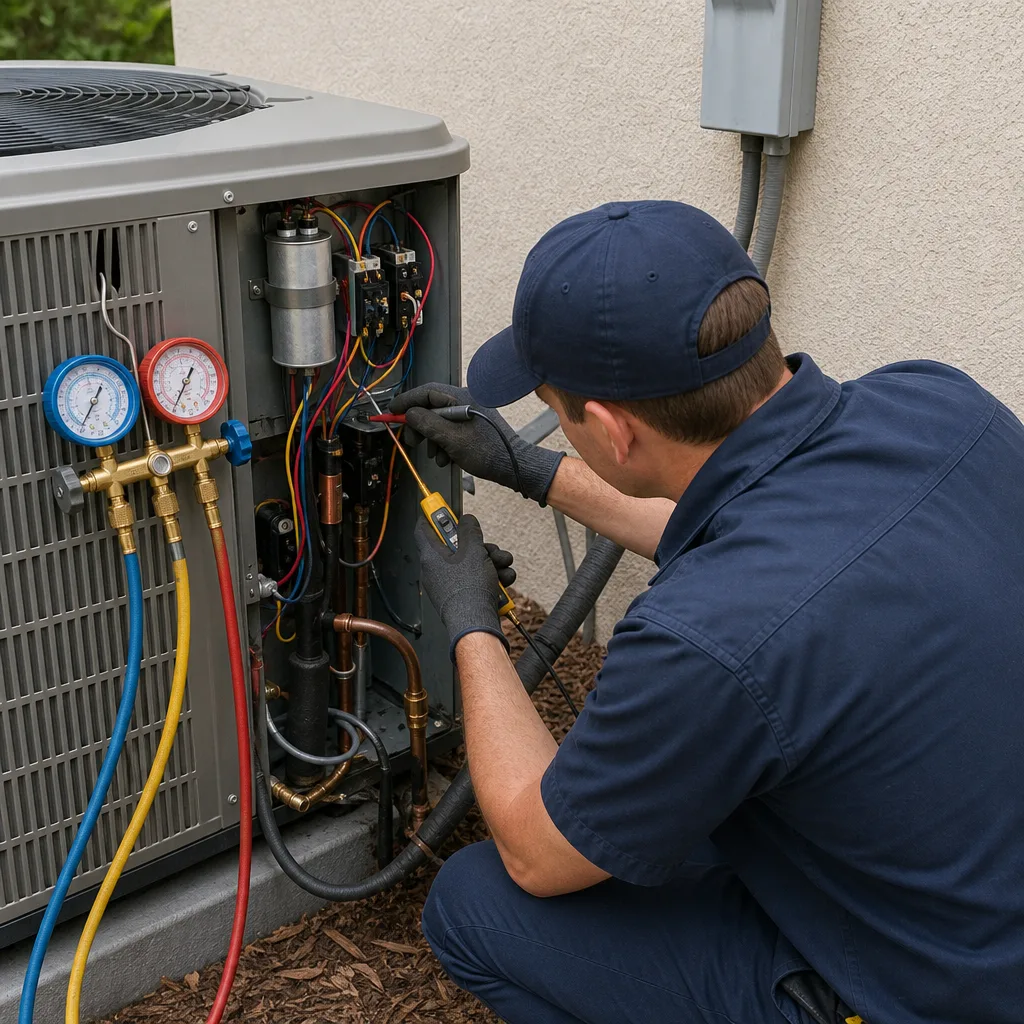
See the difference
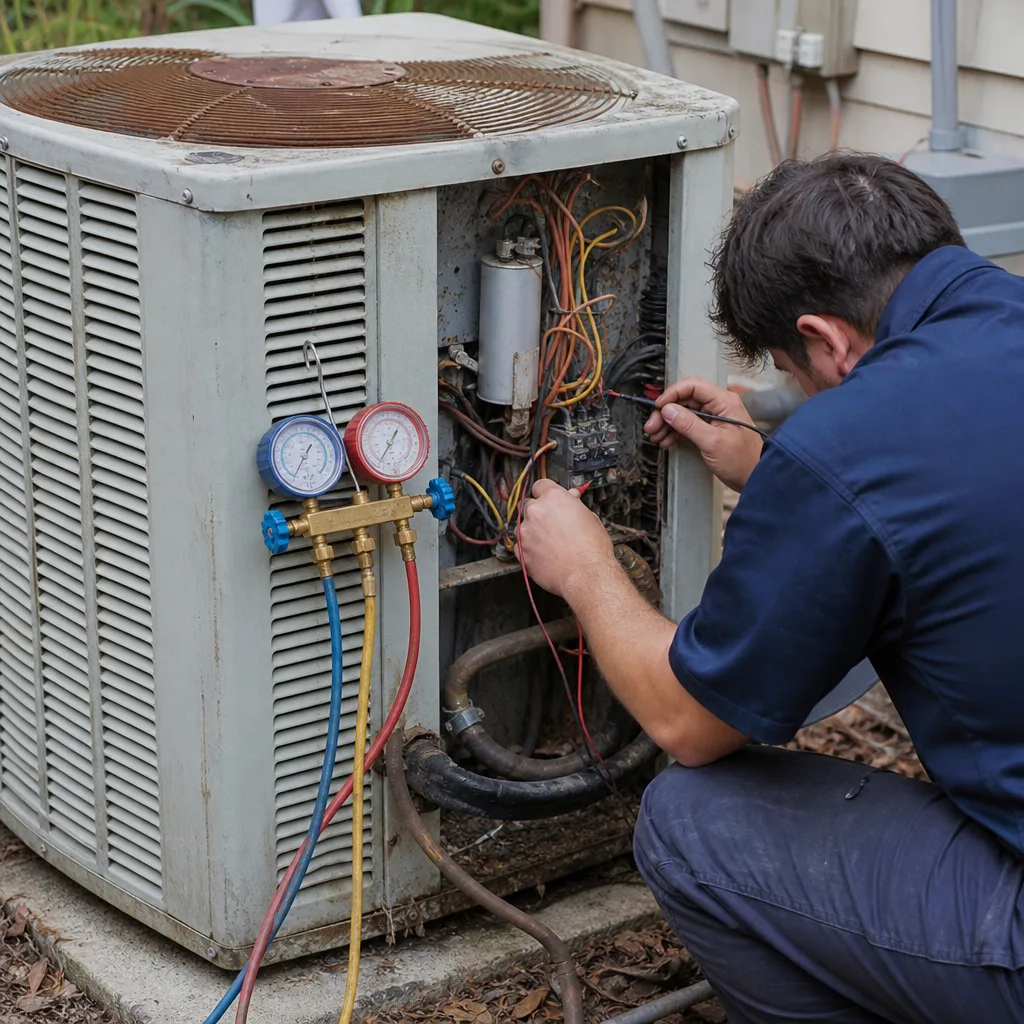 Before
 After
After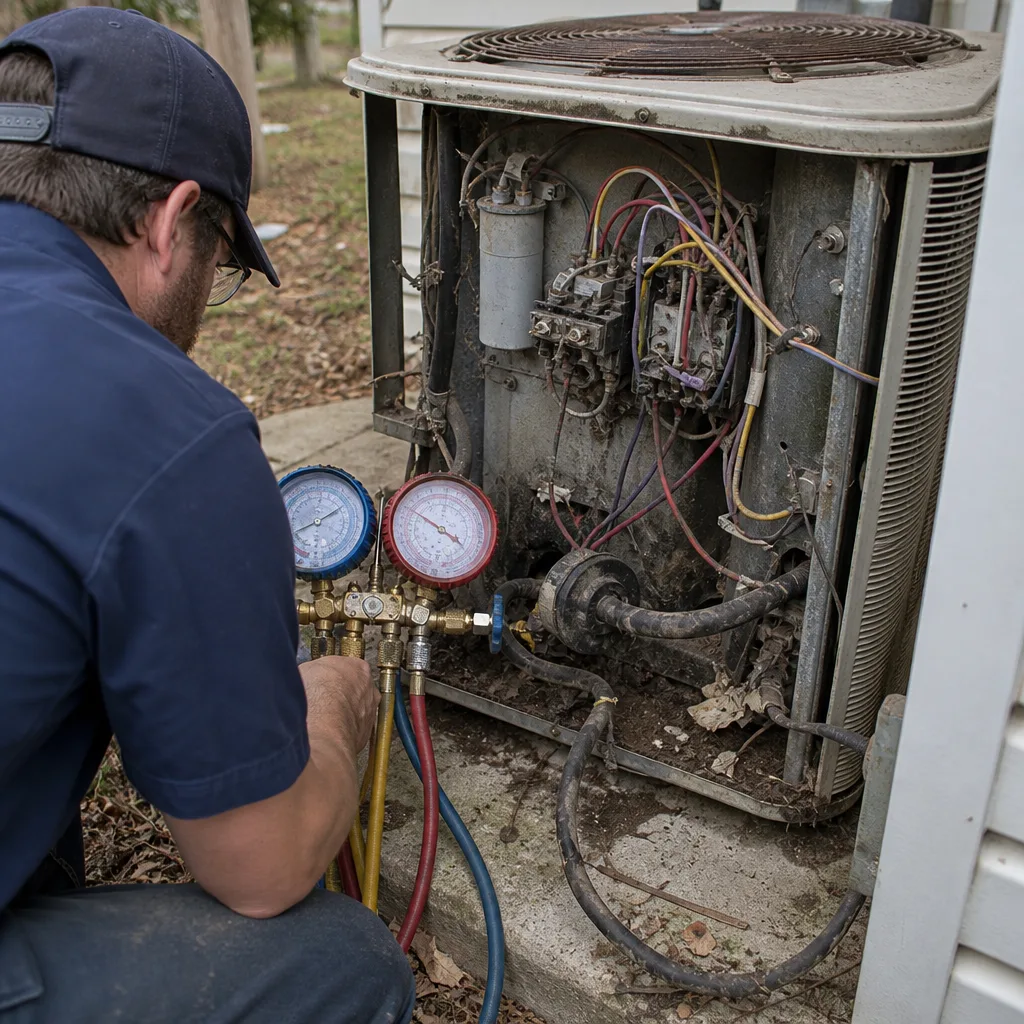 Before
 After
After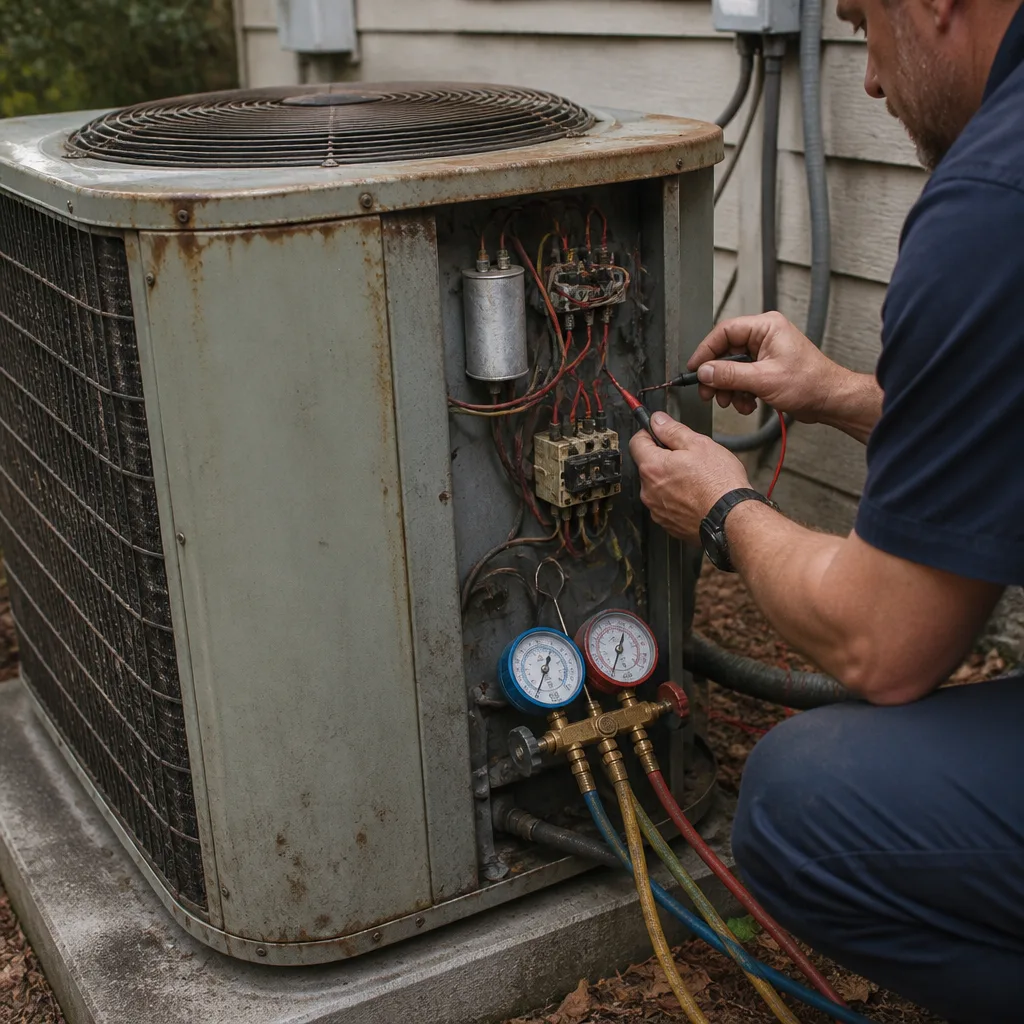 Before
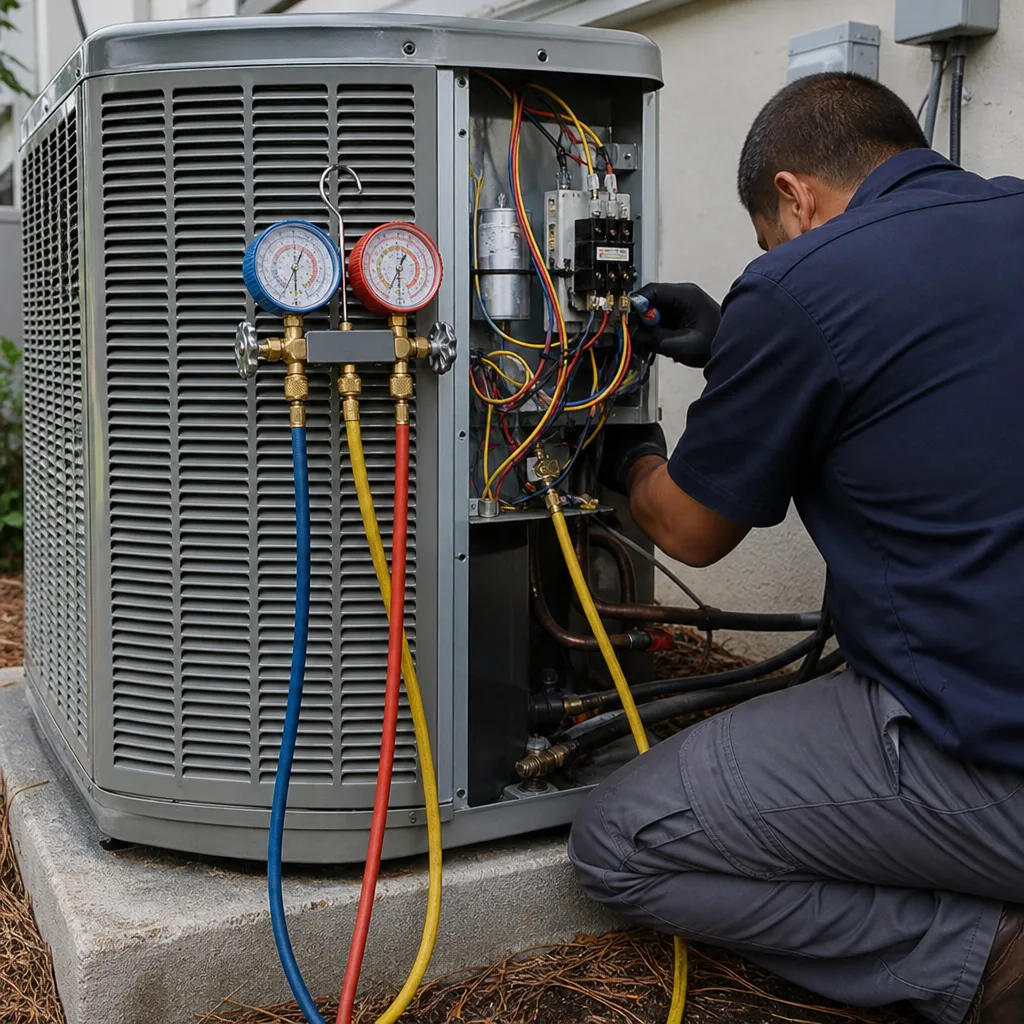 After
AfterReplacement Cost & What’s Included
For a Carrier ductwork repair in Jacksonville, most jobs land between $150 and $650 installed. A simple flex-run reconnection with mastic sealing runs on the low end. Rebuilding a return plenum in a tight Avondale attic with limited access runs toward the top. Every quote you get from us includes all parts, labor, and cleanup, written as one number before we start.
The range breaks down like this: small repairs like resealing a separated elbow or replacing a short flex section, $150 – $300. Moderate work like replacing a crushed 10-foot flex run or sealing multiple supply registers, $300 – $500. Larger repairs like a full return-air rebuild or replacing a section of rigid trunk line, $500 – $650.
Every ductwork repair we complete carries a written guarantee. If the same repair fails within 365 days, we return and fix it at no charge, no argument. That’s the 365-Day Done Right Promise, and it applies to every duct job we do in Jacksonville. We put it in writing because a guarantee you can’t read isn’t a guarantee.
DIY or Call Us?
There are a few things you can safely check yourself. Walk the accessible duct runs in your attic with a flashlight and look for obvious disconnections, crushed flex sections, or silver tape hanging loose. Feel for air escaping at joints while the system runs. Check your filter. Those observations help you describe the problem accurately when you call us, and they help us prepare the right materials before we arrive.
But here’s where DIY goes wrong, and I’ll say it plainly because I’ve pulled homeowners out of this exact situation more than once: ductwork in a Florida attic in July is dangerous. Attic temperatures regularly exceed 130 degrees. Heat exhaustion comes on fast. One wrong step through a ceiling joist puts you through the drywall and into whatever room is below. The materials themselves, fiberglass duct liner and insulation, are an irritant you don’t want on your skin or in your lungs without proper gear. This is also work that’s easy to do badly: a duct that’s not pulled tight, not sealed with mastic, and not properly supported will fail again, often within a year.
If you want eyes on it before you commit to anything, call us at (904) 456-0205. We’ll inspect it, put the exact repair and exact price in writing, and you decide. No pressure, no surprise invoices.
FAQs
Ductwork in Jacksonville typically lasts 20 to 25 years, but flex duct in a vented attic with our summer heat and humidity commonly needs repair or replacement by year 15. The insulation jacket degrades first, then the inner liner tears at connection points. If your home is over 20 years old and has never had duct work done, expect us to find something worth fixing.
Most duct problems, a separated joint, a crushed flex section, a leaky return, can be repaired without replacing the entire system. Full replacement only makes sense when the majority of the runs are undersized for your Carrier equipment, the insulation is failing throughout, or the ducts were installed badly to begin with. We’ll show you the condition and let you decide with the numbers in hand.
A single duct run repair or joint reseal usually takes 1 to 2 hours on site. A return plenum rebuild or multiple-run replacement can take half a day. We stock common duct materials, fittings, mastic, and flex duct on our trucks, so most repairs are completed on the first visit.
We stock duct materials that work with every Carrier system, including flex duct in multiple diameters, rigid pipe, mastic, hangers, and return boxes. Since Carrier equipment uses standard duct sizing based on airflow requirements, not brand-specific fittings, we arrive prepared for almost any repair. We also service ductwork connected to Trane and Lennox systems, and the same materials apply.
If your Carrier system isn’t cooling the way it should and you suspect the ducts are the problem, call (904) 456-0205. We’ll inspect it, write down exactly what’s wrong and exactly what it costs to fix, and you decide from there. Live person answers, 24/7.
Written by Devin Marlowe, Owner, Brandt HVAC Co Jacksonville at Brandt HVAC Co Jacksonville, serving Jacksonville and nearby areas.